
Premier Smith, Don’t Invoke Jesus While Your Government Watches Indigenous People Die
On faith, oil, and who gets left to die downstream.

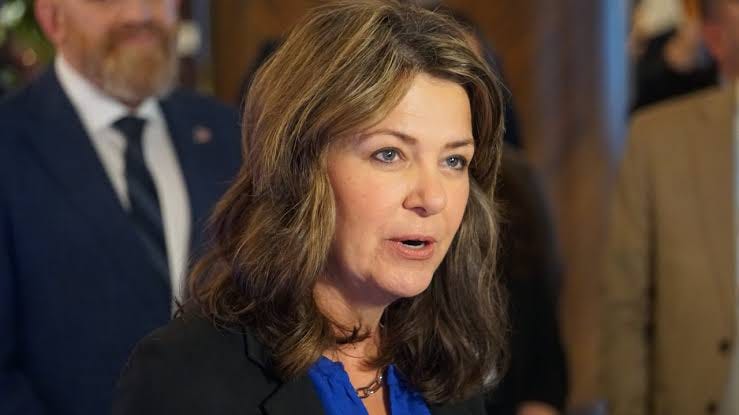
Last week, Alberta Premier Danielle Smith told a gathering of Christian leaders that building a new oil pipeline to Canada’s west coast is “consistent with the teachings of Jesus.”
I am a Christian. I am also Cree, Iroquois and French — and I’ve spent years on the frontlines reporting on what Alberta’s oil industry has actually done to Indigenous communities. So let me introduce Premier Smith to a few more teachings of Jesus she seems to have missed.
Love thy neighbour. (Mark 12:31). Seek justice, correct oppression. (Isaiah 1:17). What you do to the least of these, you do to me. (Matthew 25:40). Woe to those who make unjust laws, to those who issue oppressive decrees. (Isaiah 10:1-2).
Premier Smith has declared her ambition to double Alberta’s oil production to 8 million barrels per day by 2035. Meanwhile, I’ve been covering what the existing oil sands have already done — downstream, in the dark, where the cameras rarely go.
In Fort Chipewyan, a community that sits downstream of the largest industrial project on the surface of the earth, six out of ten households have been directly touched by cancer. The graveyard has expanded from two rows to two full sections within a single generation. I have documented children in that community with cancer. Alberta’s government says those children don’t exist. In March, when Mikisew Cree First Nation stood at Parliament Hill and announced cancer rates at least 25 percent above the provincial average, the Ministry of Primary and Preventative Health Services responded within hours — claiming adult cancer rates were “largely within normal ranges” and that there was “no evidence of pediatric cancer in the community.”
I know what I’ve seen. And I know what this government refuses to see.
When I reached out to both the Ministry of Primary and Preventative Health Services and Alberta Health Services for comment on why community health data from 2022 to present has not been provided to Mikisew Cree First Nation, responses had not been received. This is a pattern. Alberta’s Chief Medical Officer issued her assessment of Fort Chipewyan’s health crisis without first coming to the community — without sitting with the people whose lives she was rendering a verdict on. Officials have promised to visit Fort Chipewyan on multiple occasions. They have yet to come.
“Tone deaf, to be completely honest,” one Mikisew Cree official told me. “The same lines. The same rhetoric. Year after year, crisis after crisis.”
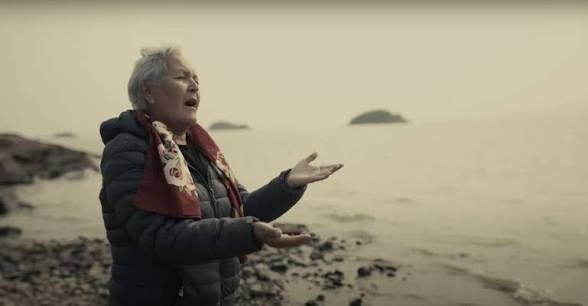
Mikisew Cree Elder Margo Vermillion sings a prayer song for the water in Fort Chipewyan. Photo: Killer Water.
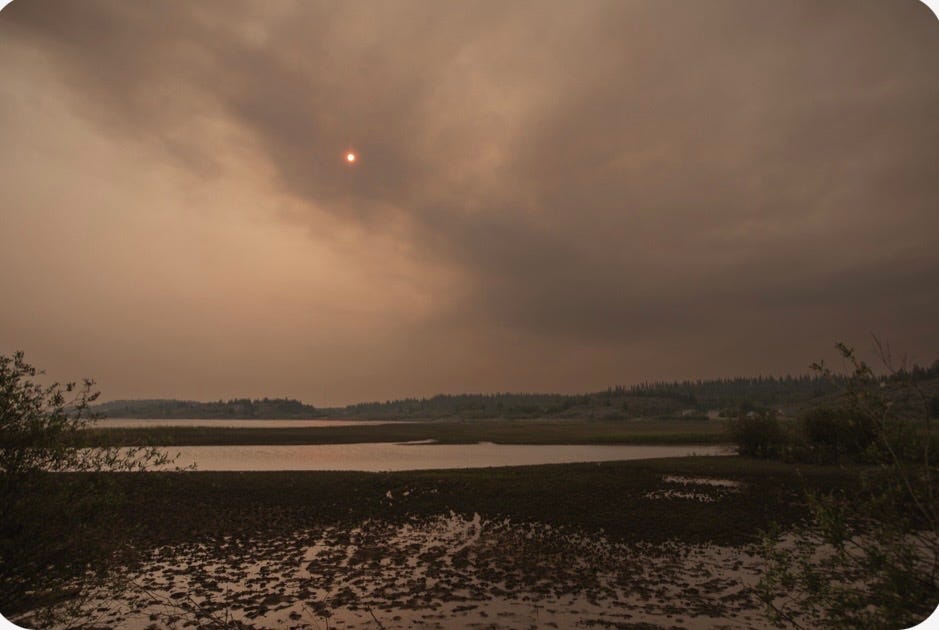
Smoke hangs in the sky over low water in Fort Chipewyan, Alberta on Friday, June 2, 2023. Drought, up stream hydro and industry use of water have contributed to low water-and increased challenges evacuating residents. (Amber Bracken)
Dr. John O’Connor first raised the alarm about elevated cancer rates in Fort Chipewyan in 2006 and was accused of causing “undue alarm.” He was vindicated. The Alberta Cancer Board confirmed rates 30 percent above expected. And still, nothing substantively changed. The same province that dismissed the Mikisew Cree health study within hours now wants to fast-track a plan allowing oil sands companies to discharge processed toxic wastewater directly into the Athabasca River — using technology that has not been proven safe. The committee that produced these recommendations was dominated by industry representatives. One Indigenous voice sat at that table. One.
This is what Free, Prior and Informed Consent looks like under Premier Smith’s government. It doesn’t.
Now Mikisew Cree First Nation has had enough. They have filed a lawsuit against both the Alberta and federal governments, alleging a failure to uphold Treaty 8 obligations and to manage the health and environmental impacts of industrial development on their territory. The lawsuit asks the court to stop governments from approving future projects that will further impact the First Nation’s territory, and calls for full remediation of the land.
I’ve been covering what the oil sands have done to these communities for years for Ricochet Media. I co-directed Killer Water, which won the 2024 Canadian Hillman Prize. I have sat with Elders watching the water change. I have documented fish pulled from the Athabasca River with tumours. I have witnessed children sick with illnesses that the province insists don’t exist.
Premier Smith, you do not get to invoke Jesus to bless a pipeline while bypassing the free, prior and informed consent of the people whose Treaty lands it crosses. You do not get to cite Christian values while your government stares down a dying community and tells them they’re within normal ranges.
Go to Fort Chipewyan. Drink the water. Look the Chiefs in the eye. Then tell them it’s within normal ranges.
The Mikisew Cree are done asking. They’ll see you in court, Premier Smith. And so will history.
Brandi Morin is an award-winning Cree and Iroquois journalist from Treaty 6 territory in Alberta, and the founder of Indigenous Insider on Substack. Her coverage of Fort Chipewyan and the oil sands has appeared in Ricochet Media, Al Jazeera, National Geographic, and The Guardian.
As a fellow Christian I too am horrified at the way Jesus and The Bible are being invoked by Danielle Smith to justify pipeline expansion. Thank you for your continued work in exposing these hypocrisies.
An excellent article. I’m horrified by the disregard and disrespect and the indifference to truth the AB government is displaying.