You Cannot Reconcile at Home While Terrorizing Indigenous People Abroad

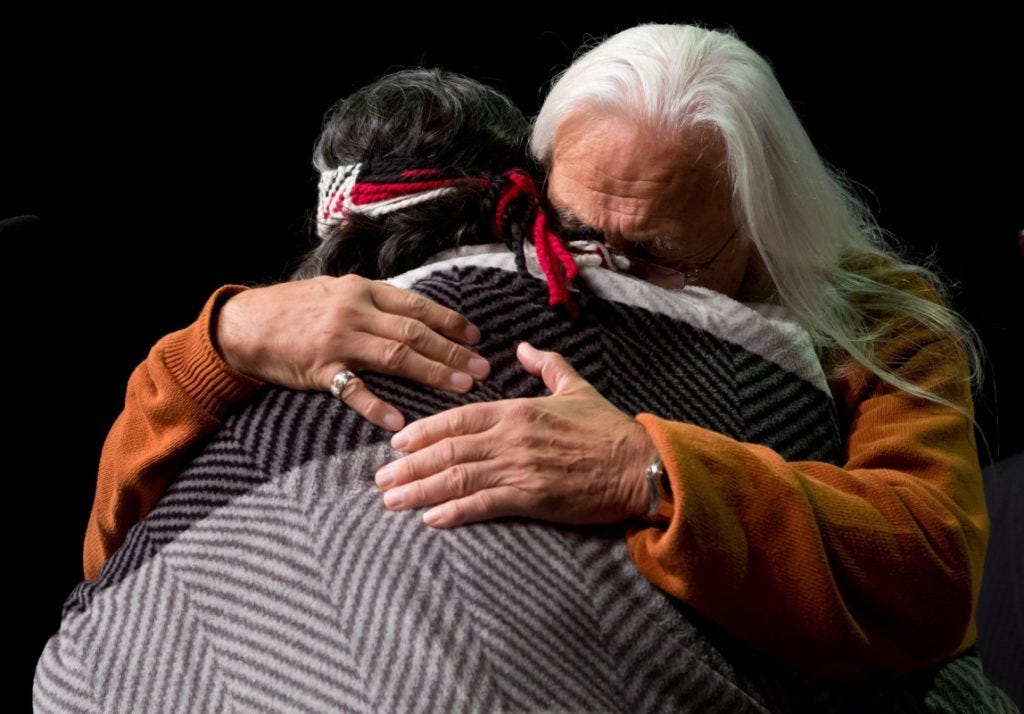
Reconciliation used to be everywhere in Canada.
On the lips of politicians. In the mandates of government departments. In the names of commissions and reports and frameworks and strategies. It felt, for a moment, like something real might be happening. Like the country was finally reckoning with what it had done and what it owed. Like Indigenous people might finally be seen — not as a problem to be managed but as peoples with rights, with title, with sovereignty that the state was obligated to respect.
That energy has quieted. The urgency has faded. The word itself has started to feel worn, hollowed out by overuse and underdelivery. And yet the issues that made reconciliation necessary in the first place have not gone anywhere. Our Missing and Murdered Women and Girls. The stolen children. The poisoned water. The underfunded communities. The land rights still unresolved after generations of promises. If anything, the need for genuine reckoning is more urgent now than it has ever been — not less.
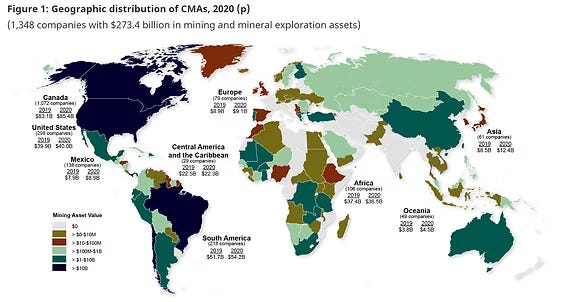
But I want to talk about a dimension of this that almost never gets discussed. Not the unresolved injustices at home — though those demand reckoning too. I want to talk about what Canada does when it leaves the country entirely. When the cameras are off and the mining companies get on their planes and Canada’s financial infrastructure goes to work in other people’s territories.
Because reconciliation — whatever it means, whatever it could mean — does not end at the border. And the violence doesn’t either.
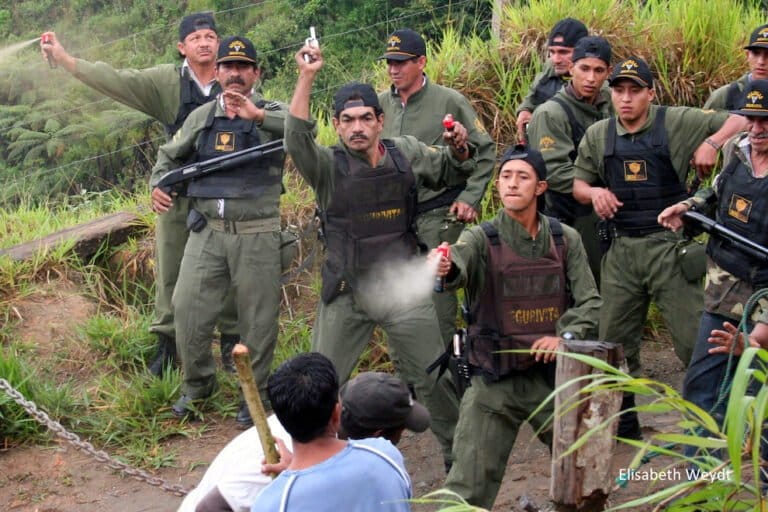
I have spent years reporting from Indigenous territories in North America, and more recently, around the world. Ecuador. Bolivia. Panama’s Guna Yala territories. The Wet’suwe’ten crisis and Fairy Creek blockades in BC. I have stood on public roads blocked by armed guards working for Canadian companies. I have sat with communities that have been militarized, divided, and criminalized for saying no. I have heard from land defenders facing terrorism charges for protecting their water. I have witnessed the fear in people’s eyes —the fear of what happens when they resist a mine.
As I write this, my heart is heavy. I am furious. Because right now, as Canada continues its reconciliation narrative at home, the beautiful Shuar people of Maikuaints in the Ecuadorian Amazon are bracing for what they describe as the potential end of their world. They are anticipating a military invasion at any moment — deployed to protect the interests of an unchecked Canadian mining company advancing on their ancestral territory without their consent. These are people who have lived in these lands since time immemorial. And they are waiting, in fear and uncertainty, for Canada’s reach to arrive with guns.
I am not going to detail every story here. You can find them in my reporting. What I want to name is the pattern, because it’s always the same pattern.
A Canadian company arrives in an Indigenous territory. Concessions are granted without adequate consultation. The community says no — through votes, through protests, through every legal mechanism available to them. The state responds with militarization, criminalization, and violence. And Canada — the Canada with the UNDRIP legislation and the reconciliation framework and the carefully worded commitments — stays silent.
Not neutral. Silent. There is a difference. Neutrality might be defensible. Silence, when your companies are the ones calling in the military, is complicity.
Now the research is catching up to what communities have been saying for decades.