


Let me say this right up front: no project is in the national interest if it is built over the objections of the Nations whose lands and waters it crosses. Indigenous voices must be in this decision. Indigenous consultation must be real. And Indigenous consent must be free, prior and informed, which means it has to be possible to say no.
That is not what happened yesterday in Fort McMurray.
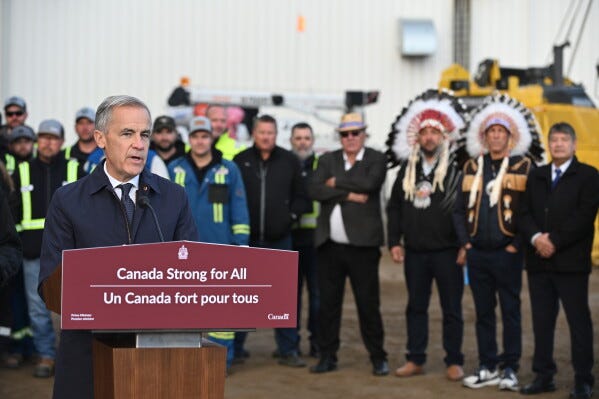
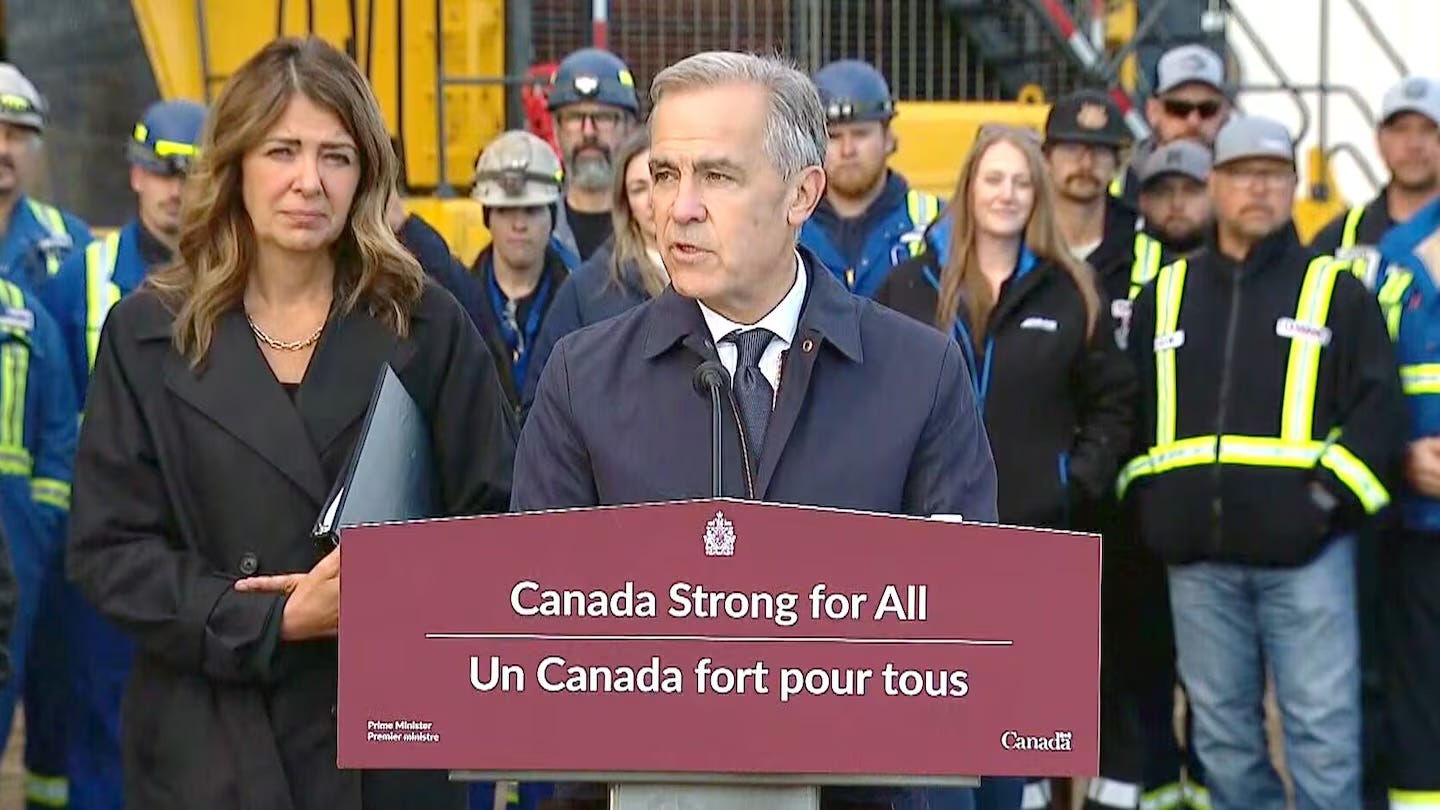
On October 1, Prime Minister Mark Carney stood beside Alberta Premier Danielle Smith in the heart of Treaty 8 territory and named a new oil pipeline to the West Coast, now branded Pacific Link, as the first-ever project of national interest under his Building Canada Act.
“This is true nation building, and it will take a nation to build it,” Carney said.
Which nation? He didn’t say.
Tansi/Hello — thank you for being here!
I have 10, 272 readers. 667 paying. That is amazing, but there’s still a big gap. And it’s the weight I carry every day.
These stories exist because I refuse to let them disappear. I have spent 15 years on the ground; I have built the trust and repertoire that barely exists anywhere else. Which is why you won’t find this kind of coverage, the way I do it, anywhere else.
I need you in this with me now more than any other time to help sustain this work.
That’s what truth and reconciliation looks like from where I’m standing.
Come step into the fire with me.
Become a paid subscriber to Indigenous Insider, Hiy Hiy:
What was announced
Pacific Link would run 1,200 kilometres from Bruderheim, Alberta, to Delta, B.C., moving an additional million barrels of oil a day once complete, most of it bound for Asia.
For all the big numbers, not one private company has stepped up to pay for the whole thing. The estimated $35 billion to $44 billion cost is to be carried by Trans Mountain Corp., a federal Crown corporation, and the Alberta government. First Nations are being offered a minimum 10 per cent stake, financed with federal and provincial loan guarantees.
Carney told reporters the Canadian taxpayer will “make a lot of money” off Pacific Link. It is worth asking whether the last publicly owned pipeline has. Trans Mountain was bought for $4.5 billion in 2018 and its expansion, once pegged at $7.4 billion, came in at $34.2 billion. On paper it now turns a profit: the Crown corporation reported $138 million last quarter and has sent a few billion dollars back to Ottawa in interest and dividends since opening in May 2024. But the Parliamentary Budget Officer has valued the finished line at between $29.6 billion and $33.4 billion, less than it cost to build. The International Institute for Sustainable Development calculates that shipping tolls cover only about $15.4 billion of that $34.2 billion bill, and that Ottawa was actually in the red once interest on the debt is counted. Simon Fraser University’s Thomas Gunton says the profit only shows up because most of the debt was moved off Trans Mountain’s books. In other words, the public has not been paid back, and may never be.
This is the first project to get the designation since Parliament passed Bill C-5 more than a year ago, and it now enters a faster, slimmed-down approval track built to reassure investors. In practice, the designation means a string of authorizations and permits are treated as already granted. A regulatory review begins once the proponent files what Ottawa calls a “comprehensive project information document,” expected early in 2027.
One senior official spelled out exactly what has changed: “The focus will move from whether the project [should] proceed to how it should proceed responsibly and under what conditions.”
So the question of whether is over. It was decided before most affected Nations had finished reading the file. Indigenous groups were given roughly two months to weigh in on the designation, and the Assembly of First Nations says it sees “many red flags” and a government that appears to be deciding outcomes ahead of consultation.
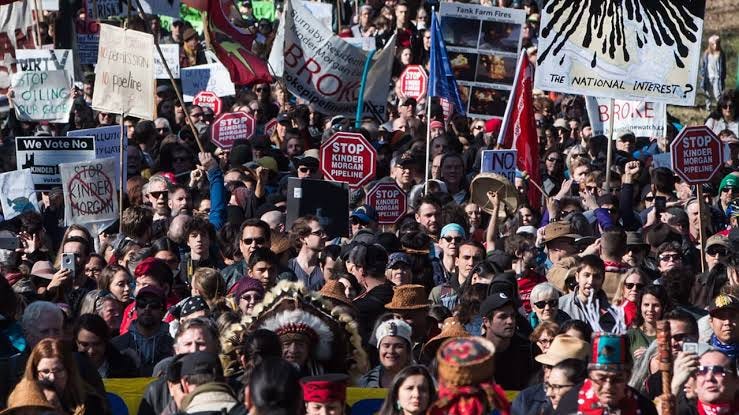
Here is what I expect to happen next, because we have watched it happen before. When Nations oppose this pipeline, and some already do, their rights will be sidestepped in the name of speed. The Wet’suwet’en hereditary chiefs said no to Coastal GasLink on their unceded territory. What they got was militarized police raids, arrests of land defenders, and a pipeline in the ground anyway. Amnesty International later documented ongoing human rights violations there. That is what “national interest” has looked like from our side of the line.
“A foregone conclusion”
Sturgeon Lake Cree Nation was blunt.
“Today’s announcement was a foregone conclusion,” the Nation said in a statement, calling the so-called consultation before the designation “pre-determined and far from ‘rigorous.’”
The Nation reminded Canada and Alberta that this is Treaty land, and that free, prior and informed consent “is not achieved through ‘loan guarantees’ or ‘conditions.’”
“We are governments and Nations, not investors or stakeholders.”
Sturgeon Lake says Ottawa, “in an act of apparent appeasement to our separatist Premier,” dismantled the federal environmental assessment regime by regulation and replaced it with “a plainly unconstitutional process that does not uphold the honour of the Crown.” The result, it warns, is the opposite of certainty: more division and more litigation.
The Nation also wants it known that some chiefs were on stage yesterday, but nobody with authority to speak for Sturgeon Lake was there. They were not even invited.
Chief Sheldon Sunshine put a question to his neighbours: “I would like to ask Albertans if they would want a pipeline built through their backyard without consultation or a data centre built across the street without a thorough environmental assessment. If the answer is no, then why would they expect us to welcome a pipeline with open arms.”
And then this: “We have stood in defence of our Treaties, and – by extension – in defence of Canada. In exchange, we have received no respectful dialogue, meaningful consultation or even a meeting directly with the Prime Minister’s Office.”
Equity is not consent
Treaty 8 Sovereign Nations struck a more measured tone, but the line it drew is just as firm.
“Treaty 8 Nations are not opposed to development, but development cannot happen around us,” said Grand Chief Trevor Mercredi. “Our Nations must be at the table from the beginning. That means meaningful consultation, protection of our lands and waters, participation in the regulatory process, and real opportunities for equity ownership and long-term economic benefits.”
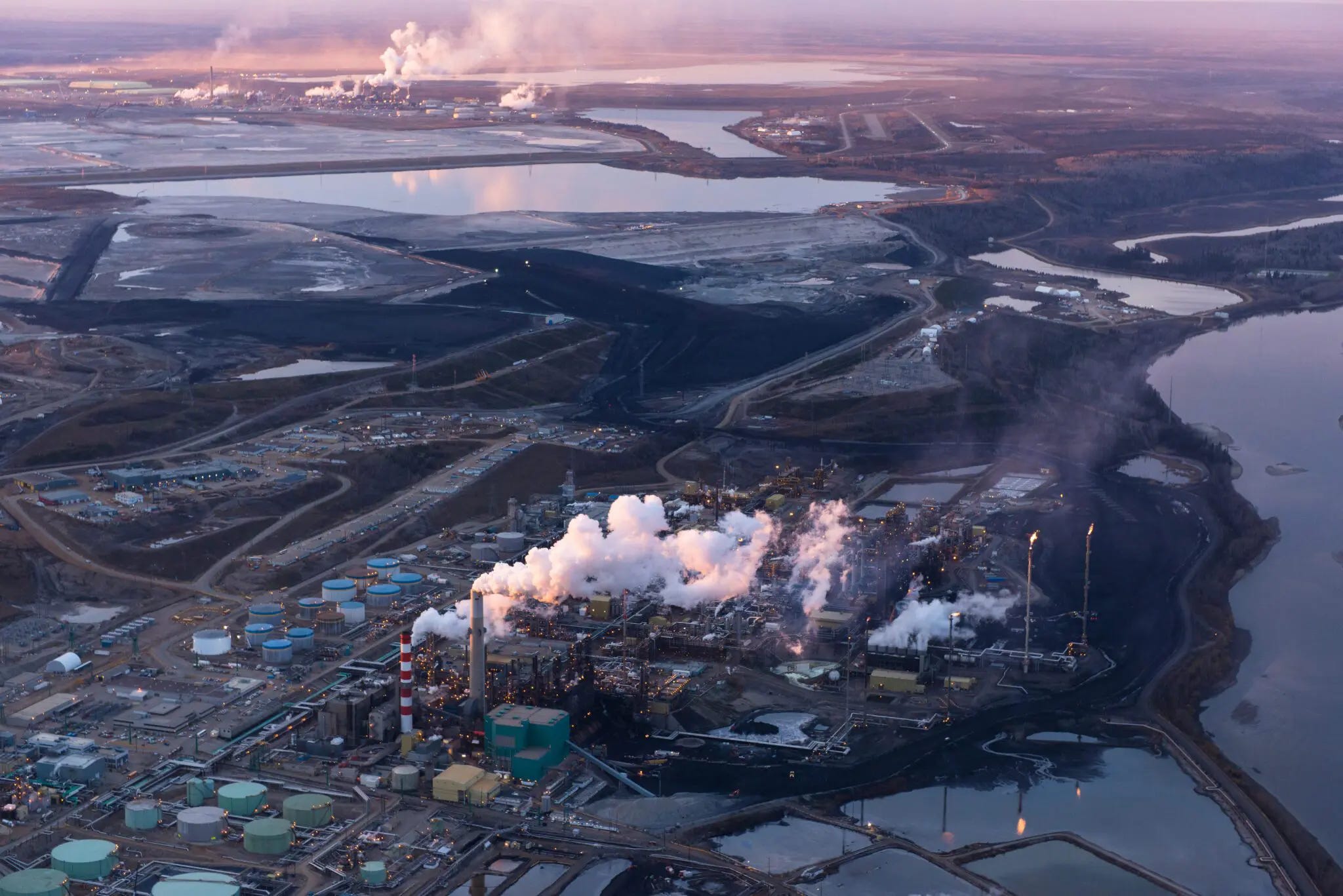
The organization pointed out that any new oil sands production feeding Pacific Link lands on top of what its Nations already live with: tailings ponds, water quality, reclamation liabilities, and the steady erosion of traditional ways of life.
It also shut the door on the idea that an ownership stake can stand in for rights. “Equity participation does not replace the Crown’s constitutional obligations, nor does economic participation constitute consent to impacts on Treaty rights.”
At the point of extraction
The five chiefs of the Athabasca Tribal Council met with Carney on September 30, the day before the announcement. Their Nations sit at the extraction point and, as the council put it, face the largest impacts. They walked in with serious environmental and human health concerns.
According to the council, Carney committed to equity ownership, co-developing environmental regulations, and protecting the Athabasca River. Equity had been promised to Nations along the pipeline route but not to those at the source; the chiefs say the prime minister assured them they will now be included.
“We started this meeting with serious concerns, but left encouraged,” said Chief Allan Adam of Athabasca Chipewyan First Nation, president of the council. “But make no mistake—we will work with the prime minister to ensure his commitments to the highest environmental regulations and the protection of our land and People are realized.”
That is not an endorsement. It is a chief putting a prime minister on notice. Mikisew Cree First Nation Chief Melody Lepine told CBC she is not ready to endorse the pipeline either. Fort McKay First Nation Chief Raymond Powder said he is interested in a partnership, provided environmental concerns are dealt with.
Indigenous Nations are not a monolith, and every Nation has the right to decide for itself. That is precisely the point. A right to say yes means nothing without a right to say no.
The coast says no
In B.C., the answer is already clear. The Union of B.C. Indian Chiefs rejected the designation outright, saying title and rights cannot be shelved to meet a political timeline.
Grand Chief Stewart Phillip, UBCIC’s president, warned that Ottawa is treating Pacific Link as a template for the projects to come, and promised the fight will be “hard-fought in the court rooms, and if necessary, with boots on the ground.”
Heiltsuk Chief Marilyn Slett, UBCIC’s secretary-treasurer, said the fight is about keeping supertankers off the coast. Her people are still seeking justice ten years after the Nathan E. Stewart fuel spill fouled their marine harvesting grounds. Chief Dalton Silver of Semá:th First Nation warned of a million more barrels a day crossing major salmon rivers and moving through the Salish Sea, and called pre-approval without consent both unwise and unlawful. Chief Dan Manuel of Upper Nicola said his people never ceded their lands, yet are forced to defend them in a colonial court system they never agreed to. Katisha Paul, UBCIC’s women’s representative, asked the question that hangs over all of this: whose national interest?
UBCIC’s Chiefs-in-Assembly have passed resolutions rejecting the designation and calling for a halt to major resource projects in B.C. until outstanding claims are independently reviewed. Along the route, Coldwater Indian Band says it is weighing court or other action. Even federal officials admit they expect legal challenges.
Rights are not red tape
Amnesty International Canada warned when Bill C-5 passed that it posed a “troubling threat” to Indigenous rights. Yesterday it said the designation means fewer environmental assessments and shorter windows for community and Indigenous consultation.
“Human rights and respect for constitutionally protected Aboriginal rights and title, in addition to Indigenous Peoples’ right to self-determination, must not be spun as inconveniences to Canada’s economic aspirations,” said Ketty Nivyabandi, secretary general of Amnesty International Canada’s English-speaking section.
Amnesty also named the timing. This decision lands at the end of one of Canada’s worst wildfire seasons on record and the hottest summer ever recorded in the northern hemisphere. Nearly 4.5 million hectares burned between January and mid-September, forcing more than 25,000 people from their homes. At least 16 First Nations in B.C. and 14 in Ontario were evacuated.
“Fast-tracking oil pipelines and slashing emissions-reduction targets are the wrong choices at the worst time,” Nivyabandi said.
Our communities are the first to be evacuated when the land burns, and now we are being asked to host the infrastructure that feeds the fire.
No excuse
I understand the politics. Carney is governing on shaky ground. The trade war with Donald Trump has rattled the economy, and he has sold Bill C-5 from the start as Canada’s answer to that threat. Smith has her own pressures, and her own separatists.
None of it is an excuse. Treaty and inherent rights are not suspended when the economy is under strain. Section 35 does not come with a trade-war exemption. Canada passed a law committing itself to the UN Declaration on the Rights of Indigenous Peoples, and that commitment does not expire when it becomes inconvenient.
Governments in this country have violated Indigenous rights for the sake of the “national interest” for more than 150 years. The railway was in the national interest. So were the dams. So were the residential schools, if you asked the men who built them.
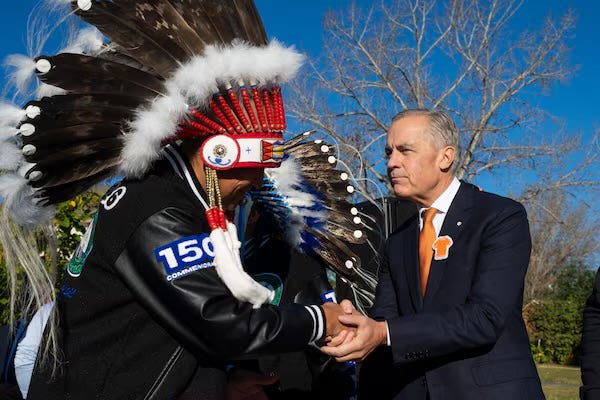
The day before he flew to Fort McMurray, Carney was in Edmonton for the National Day for Truth and Reconciliation. Speaking at Fort Edmonton Park, he said Canada owes residential school survivors and their families more than remembrance. “We owe them action,” he said, and he told the crowd that Canada should not hear the truth of residential schools and then fail to act on it.
Twenty-four hours later he was on a stage in Treaty 8 territory, pre-approving a pipeline that Nations along its route say they never consented to.
Eleven years after the Truth and Reconciliation Commission’s final report, only 14 of its 94 Calls to Action are complete, according to Indigenous Watchdog. Call to Action 43 asks governments to fully adopt and implement the UN Declaration on the Rights of Indigenous Peoples. Free, prior and informed consent is at the heart of that declaration.
So here is the action you owe, Prime Minister. Do it now. Live up to your own words.
It has to stop, no matter who is in the Prime Minister’s Office and no matter who is in the White House.
If it truly takes a nation to build this, Mr. Carney, then start with the Nations who were here first. And be prepared to hear no.

Brandi Morin is a multi-award-winning Cree/Iroquois/French journalist from Treaty 6 territory in Alberta. She is the founder of Indigenous Insider on Substack and the author of the national bestselling memoir Our Voice of Fire.
Sources
Statements from Sturgeon Lake Cree Nation, Treaty 8 Sovereign Nations, Athabasca Tribal Council and Amnesty International Canada, Oct. 1, 2026
UBCIC: UBCIC Rejects “National Interest” Designation for Pacific Link
CBC: Mayors, First Nations chiefs in Alberta’s oilsands region react tentatively
CBC: Building Canada Act a ‘troubling threat’ to Indigenous rights, says Amnesty
Amnesty International Canada: Bill C-5 sidelines Indigenous rights
CBC: Amnesty reports ‘ongoing violations’ on Wet’suwet’en territory
APTN: First Nations along Pacific Link route denounce lack of consultation
Global News / Canadian Press: Indigenous groups given just 2 months to consult
Globe and Mail: Ottawa designates West Coast pipeline a project of national interest
BNN Bloomberg: Canada’s first-ever project of national interest revealed
Daily Hive: Pacific Link officially declared a national priority
Globe and Mail: Trans Mountain pumps $450-million into federal coffers
CBC: Federal government faces potential loss if Trans Mountain sold, says PBO
The Tyee: Is Trans Mountain’s Profitability an Accounting Illusion?
The Hub: Trans Mountain proves the business case for a West Coast pipeline
Global News: ‘We owe them action,’ Carney says on Truth and Reconciliation Day
National interest always seems to be defined from the perspective of those who own the nation, not those who live within it.
Thank you for your brillant relaying of actualities. Your work is more than educational, it paints the real portrait of current affairs. Bravo!