

Vanishing Into Custody
Indigenous women are overflowing the prison system. Nobody’s watching, and I lived it.

TANSI! I’m so glad you’re here at Indigenous Insider.
Right now, 9,211 of you are subscribed. 590 are paying subscribers. That’s amazing — and it’s also not enough. That gap is the weight I carry every day as I work to get these stories out into the world.
Indigenous Insider is reader-supported. That means every story exists because someone decided it mattered enough to back it. No corporate backer softening the truth. No editor telling me which stories are “too much.” Just readers, and me, and the stories that need telling.
These stories exist because I refuse to let them disappear. I’ve spent 15 years on the ground building the trust and relationships that barely exist anywhere else in this industry. That’s why you won’t find this kind of coverage — this depth, this access, this honesty — anywhere else.
I need you in this with me now more than ever.
This is what reconciliation looks like from where I’m standing: not a slogan, but fire. Truth. Action on the ground. Heart and wild inspiration, rooted in an Indigenous worldview.
This is the moment to stand with me. If you’ve been reading, waiting, thinking about it — become a paying subscriber today, and let’s build something the world can’t ignore.
Step into the fire with me. Become a paid subscriber.
Hiy hiy.
Indigenous women are overflowing Canada’s prison system, and hardly anyone in this country knows it.
I was once one of them. If you’ve read my book Our Voice of Fire, then you know some of my story already. But for those who don’t, this is what I fought through, prayed through and came through. Others in similiar situations did not.
I was thirteen years old the first time I went to jail, and by then I had already learned, in the deepest parts of me, that no one was coming to save me.
I’d spent most of my childhood in and out of foster care, starting around age six, because my parents — who loved me fiercely, in the way that intergenerational survivors of trauma often do — were also fighting their own private wars with violence and addiction that spilled over onto me. By twelve, I had run from a group home with two other girls, chasing something that felt like freedom, and ended up in a downtown Edmonton apartment where I was confined and raped for days, until I finally broke free and ran to my Kohkum’s house. When I eventually went back and told my caseworker what had happened to me, she looked at me and said, “Well, Brandi, that’s what happens when you take off.” That sentence haunted me for years. It taught me, long before any court ever did, exactly how much the system believed I was worth.
So when I turned thirteen and a sixteen-year-old boy from the city offered me a road trip, promising the kind of love and belonging I’d been chasing my whole short life, I didn’t hesitate. I jumped into a car that turned out to be stolen, high on the idea that someone finally wanted me around. We drove out to Camrose and broke into a house that was supposed to be empty, looking for anything we could pawn to keep running further from everything I was trying to escape. A man walked out of a bedroom none of us knew was occupied, and I bolted for the door, and for a few days we thought we’d gotten away with it, until the police showed up to arrest me and the others.
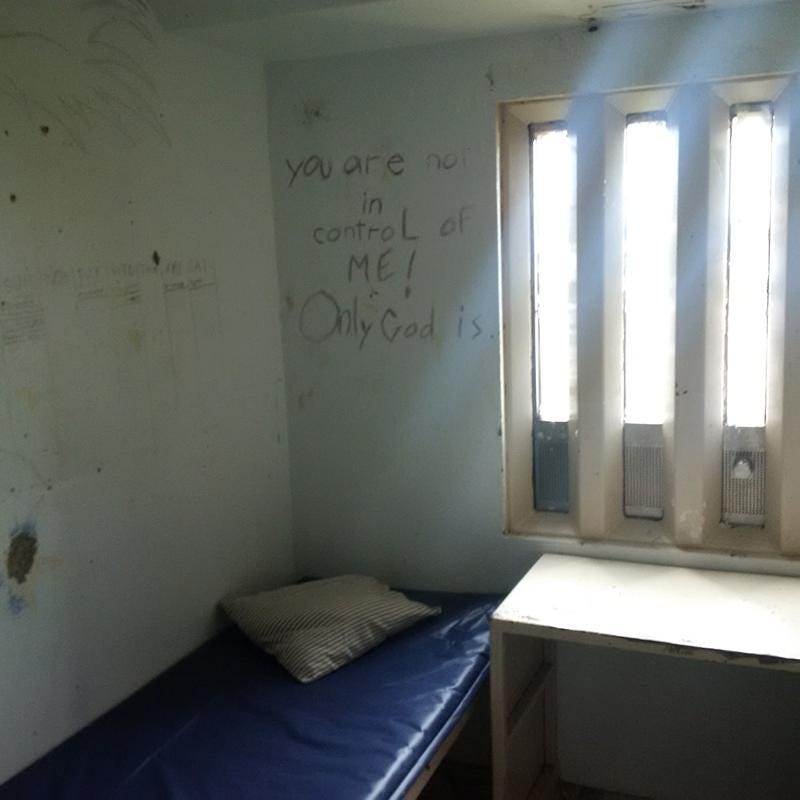
I’d leveled up, in other words, from group homes to the real thing: six months sentenced to the Edmonton Young Offender Centre. Life at the group homes had been hard, but it turned out to be nothing compared to what waited for me there. Jail was humiliating strip searches and daily harassment and, for kids like me who couldn’t keep our mouths shut, solitary confinement used as a punishment. The first time I refused to go to my cell and mouthed off at a staff member, a guard showed up and shackled my hands together and led me off the ward to the solitary confinement unit, and pushed me inside.
I still remember that cell — cold concrete, a thin blanket, a barred window I could barely see through, and nightmares that felt ripped straight from my kohkum’s doomsday sermons, the kind she preached because she was a survivor of residential school herself, and hellfire and dripping blood and burning souls were the only language the church had ever given her for what was coming if she didn’t confess her sins. Those sermons were the closest thing I had to a map for how to survive fear, so my mind reached for them in that cell, full of visions of white crosses dripping blood and souls burning in anguish. Back on the unit later on, my cellmate’s stories from growing up on Saddle Lake Cree Nation — the violence, the poverty, the sheer scale of what she’d survived — made my own turbulent childhood sound almost gentle by comparison, and I remember feeling, even then, a strange kind of guilt about that. Her name was Sam, she was older, bigger and street smart beyond what any kid our age should’ve been. She terrified me until she didn’t, until she was looking out for me the way no adult ever had, and I was idolizing her the way a kid idolizes someone who makes you feel safe. Sam died young, a few years ago, after a battle with cancer.
I remember another girl too, Samantha, a beautiful mixed Asian-Cree and baby-faced, with a laugh so big and infectious that for a moment she could make you forget you were locked inside a concrete building at thirteen years old. A few years after we met, Samantha hanged herself.
And I remember Buffy, older than me and fiercely protective, the kind of girl who called me her little sister and steered me away from the hardest drugs floating around us. A few years ago, I learned that Buffy had been found murdered in a hotel room in Edmonton. No one was ever arrested for it, and whoever did it never had any idea what he was erasing from this world — to him, she was probably just another disposable Indian, trash to be dumped somewhere and forgotten.
Sam. Samantha. Buffy. I carry their names with me sometimes, because I was the one who kept walking out while they didn’t, and I still don’t fully understand why, except that it fills me with grief and guilt and gratitude in equal measure, all at once, every single time I let myself think about it. What I do understand, with total clarity, is that what happened to me at thirteen was never just one wayward kid making a bad decision. It was the predictable output of a pipeline that starts in broken homes and foster placements and group homes that don’t protect anyone, and empties directly into youth detention centres and, eventually, federal prisons. That pipeline is still running today, wide open, funnelling our women and girls out of their communities and into cages, and for far too many of them, out of this world entirely.
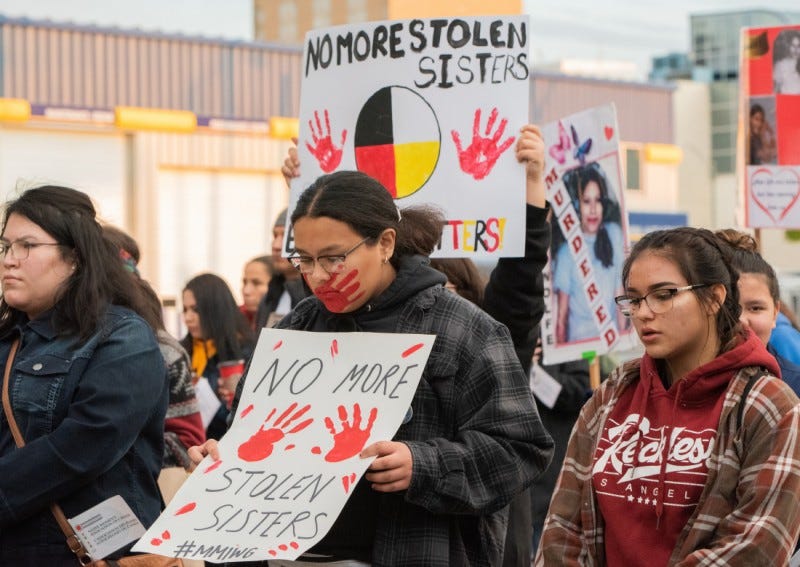
This is not separate from the genocide of our stolen sisters.
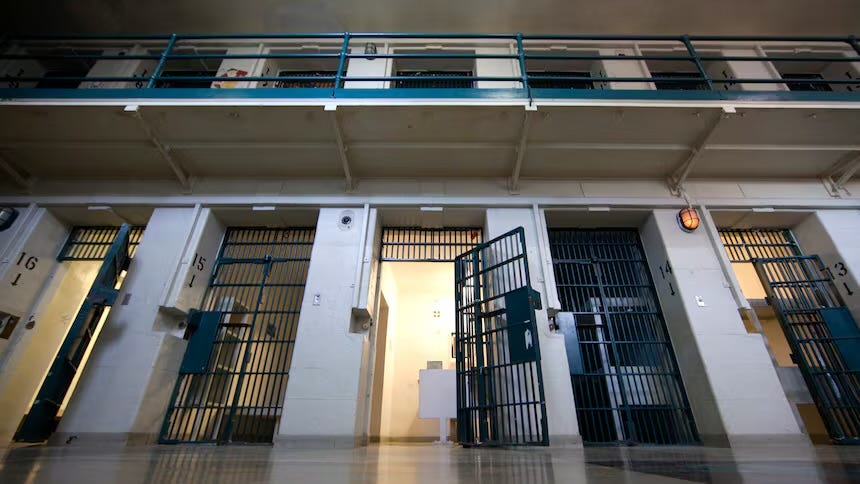
We talk about Missing and Murdered Indigenous Women and Girls as one crisis and mass incarceration as another, as though the two don’t share a bloodline, but they do, completely, and I think the only reason we keep treating them as separate stories is that one ends in a river or a landfill and the other ends behind a locked door, and somehow society has decided those are different kinds of tragedy instead of the same tragedy, it’s just packaged differently. The same conditions that make our women disappear off the streets of Winnipeg and Edmonton and Regina — poverty, displacement from land and family, the wreckage left behind by residential schools and the Sixties Scoop, violence that has been normalized against us since first contact — are the exact conditions that funnel us into prison instead of into a grave, or sometimes into both, one after the other. Sometimes a woman survives an assault only to be the one who gets charged for defending herself. Sometimes the girl who runs from one form of captivity lands straight into another- it’s the same story, although one is left for dead and the other is still breathing, but held captive behind bars. The 2019 National Inquiry into MMIWG called what is happening to us a genocide, and it went further than that: it specifically named the incarceration of Indigenous women and girls as one of the forms that genocide takes in this country, right now, in real time.
And the numbers, when you actually sit with them, are staggering.
Indigenous women now make up roughly 50 percent of all women in federal prison in Canada, while we account for only about 5 percent of the female population nationwide. At the Edmonton Institution for Women, the facility closest to where I grew up, Indigenous women make up over 72 percent of the population, according to data obtained by the Investigative Journalism Foundation. Statistics Canada’s overrepresentation index, which measures how many times more likely Indigenous people are to be incarcerated compared to non-Indigenous people, puts the figure for Indigenous women at 18.4 in the most recent reporting period, and between 2019/2020 and 2023/2024 alone, the incarceration rate for Indigenous women climbed by 22 percent while it actually dropped for non-Indigenous women over that same stretch of time. We are being locked up in maximum security at nearly 65 percent of that entire population, and depending on where in this country you happen to be born, the disparity only gets worse: in Saskatchewan, Indigenous people are incarcerated at close to 28 times the rate of non-Indigenous people, in Alberta it’s roughly 15.5 times, and Ontario and British Columbia both sit above 11 and 12 times respectively.
Here is something I don’t think gets said often enough: Indigenous women are actually more overrepresented, relative to our non-Indigenous counterparts, than Indigenous men are relative to theirs. Indigenous men are incarcerated at roughly 8 to 10 times the rate of non-Indigenous men, which is already an insane discrepency on its own, but for Indigenous women, that gap widens to somewhere between 12.5 and 18.4 times. More Indigenous men are in prison in raw numbers, because more men in general end up in prison. But if you measure it the way statisticians do — by asking how much more likely each group is to be locked up than their non-Indigenous peers of the same gender — Indigenous women are being failed by this system even more severely than Indigenous men are. The gap between us and everyone else is wider than the gap between our men and everyone else. Justice Canada’s own research division has called Indigenous women the fastest-growing population in federal custody, full stop, no qualifiers. Between 2002 and 2012 alone, the number of Indigenous women in federal prison grew by 97 percent, while the number of Indigenous men grew by a comparatively smaller 34 percent over that same decade. We are being swept up faster than our own men are, and I don’t think nearly enough people are screaming about that the way they should be.
None of the causes here are a mystery. They have been named, over and over again, by commission after commission, and ignored, over and over again, by government after government.
The Truth and Reconciliation Commission named it back in 2015, when it explained that colonialism deliberately disempowered Indigenous women, stripping us of the political and social standing that many of our nations had granted us long before contact, and in doing so set the conditions for both the violence done to us and the criminalization of however we managed to survive it. The National Inquiry into MMIWG named it again in 2019, in language most of Canada still hasn’t fully reckoned with, declaring that the incarceration of Indigenous women and girls is itself a form of colonization, that strip-searches amount to state-sanctioned sexual assault, and that solitary confinement and the forced separation of mothers from their children are forms of violence in their own right, not merely unfortunate side effects of a punishment being carried out.
Indigenous legal advocates keep pointing to the same throughline I lived myself, which is the criminalization of survival: women charged for defending themselves against the very men who hurt them, women counter-charged the moment they work up the courage to call police on an abuser, women whose only real offence was poverty, or an addiction born out of trauma nobody ever bothered to treat, or a childhood spent bouncing between foster placements and group homes within a child welfare system that, if we’re being honest with ourselves, now holds more of our children than residential schools ever managed to hold at their peak. The Gladue principle was supposed to be the fix for all of this, requiring judges to weigh the impacts of colonial history before handing down a sentence to an Indigenous person, and yet legal experts will tell you straight up that the remedy simply isn’t working, and the numbers I’ve just laid out prove exactly that.
I met one of these women once, before the system finished with her.
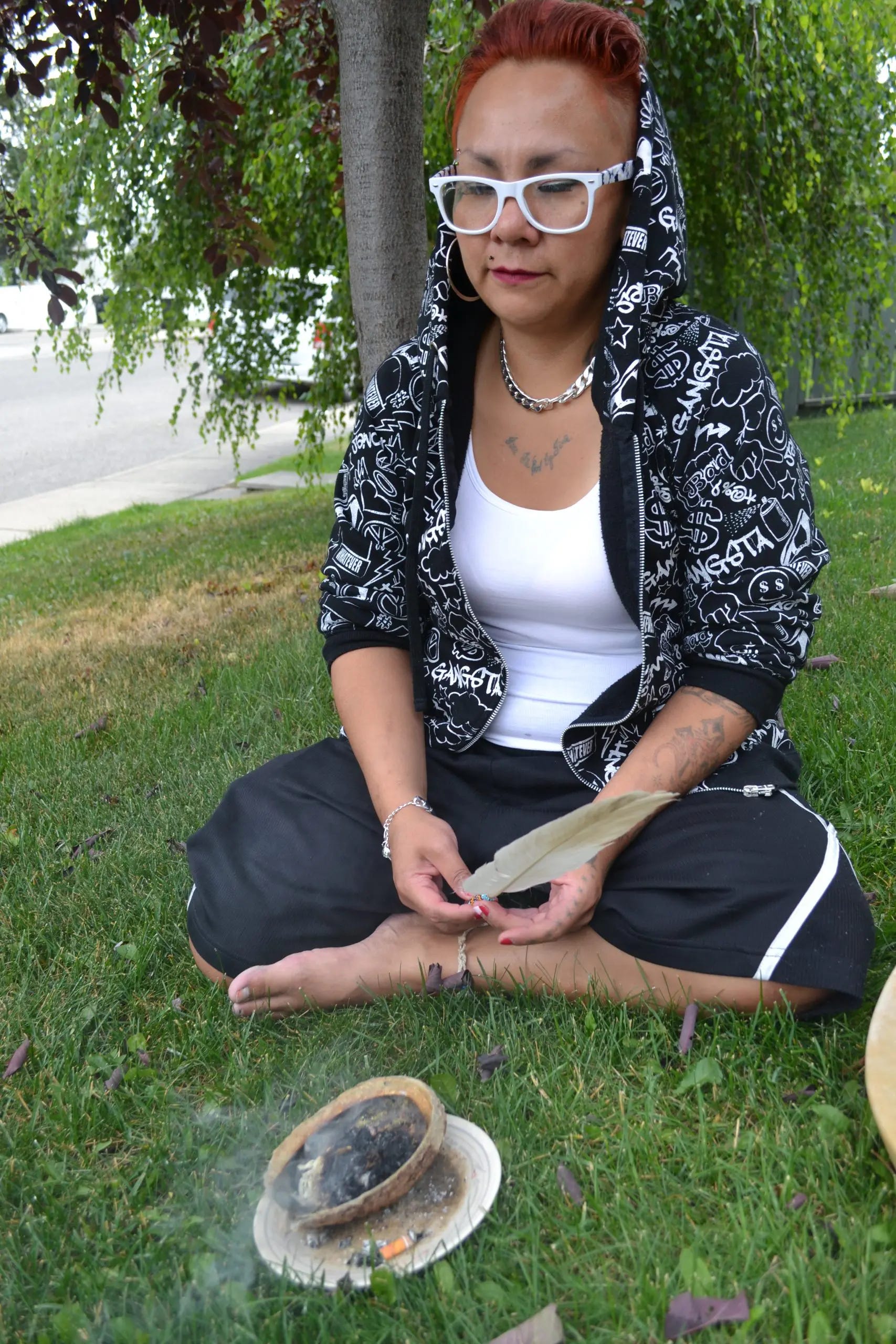
In 2015, when I was working as a reporter for APTN National News, I sat down with a woman named Josie Pelletier on the front lawn of a Calgary halfway house, and she told me everything about her life. She was thirty years old and had been in and out of jail or prison since she was thirteen, the exact same age I was when I first went in. Her story could have been mine on a different day, with different luck: time in a residential school, poverty, family violence, a childhood in foster care, an intravenous drug habit that started at thirteen, a criminal record that stretched back nearly two decades. She told me she’d spent more than a year straight in solitary confinement inside prison, locked down twenty-three hours a day, and that she was considered so dangerous she had to spend her one hour out of the cell shackled and chained head to toe with a spit mask over her face. She told me she prayed to the Creator in that cell to keep from losing her mind, and that all she wanted was to get out and be a mother to her fifteen-year-old son again, to give him something to be proud of. She showed me an eagle feather. She told me that for the first time in a long time, when she looked in the mirror, she saw a survivor.
Three years later, in 2018, Calgary police shot Josie seven times and killed her. She’d gone missing for a few days from that same halfway house — unlawfully at large, in the language of the system that was supposed to be helping her reintegrate — and police found her barricaded in a basement suite with a teenage boy during a break and enter call. The Alberta Serious Incident Response Team, the same kind of police-run oversight body that investigates itself far more often than it holds itself accountable, concluded the shooting was justified, that Josie had picked up a knife and stabbed the boy, and that officers fired to save his life. Maybe that’s exactly what happened in that basement. But a body built to police the police is not where I’d look for the full truth about what happens when a woman with Josie’s history ends up cornered by a tactical unit instead of the trauma support she’d been asking for her whole life. Everything leading up to that room — the residential school in her family history, the poverty, the abuse, the addiction, the years spent institutionalized instead of healed — is exactly the story this piece is about. Josie wasn’t just failed by one bad moment in a basement. She was failed for thirty-three years, by every system that was supposed to catch her before it came to that, and then she became a statistic in an entirely different column: not incarceration, but the small, rarely counted list of Indigenous women killed by police. Her eagle feather. How badly she wanted to change, and how little this country gave her to change with — that’s what stays with me.
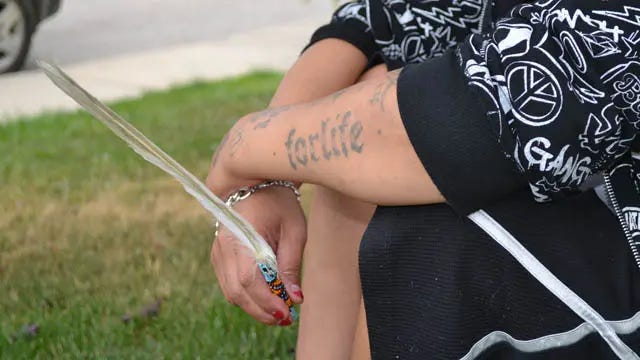
So the question becomes: what is actually being done about any of this?
Some things, on paper, at least. Correctional Service Canada operates healing lodges under Section 81 of the Corrections and Conditional Release Act, including Okimaw Ohci in Saskatchewan, which opened in 1995 as the first healing lodge built specifically for Indigenous women, along with Buffalo Sage Wellness House and the Stan Daniels Healing Centre right here in Edmonton. In March of this year, Ottawa put nearly $4.7 million toward the reintegration program run by the Thunder Woman Healing Lodge Society in Toronto, meant to support Indigenous women coming out of both federal and provincial custody, and there’s also an Indigenous Community Corrections Initiative currently funding grassroots reintegration work across the country, while CSC says it’s piloting a revised Indigenous Women Offender Correctional Program as we speak.
But Indigenous organizations and First Nations leaders have been blunt, again and again, about what is still missing, and it isn’t a lack of ideas. The alternatives already exist and have existed for years: Indigenous Justice Centres, diversion programs, Gladue services, restorative justice initiatives, community-based reintegration supports, all of them ready to go, all of them still starved of the equitable and sustained investment this country keeps promising and somehow never delivers in full. The Truth and Reconciliation Commission gave Canada a full decade, back in 2015, to eliminate the overrepresentation of Indigenous people in custody entirely. That decade came, and it went. The numbers did not fall. They climbed instead.
What gets me, honestly, is how every commission, every inquiry, every correctional investigator’s annual report says essentially the same thing using slightly different words, year after year after year, and yet the population of Indigenous women inside these institutions just keeps growing regardless. Ivan Zinger, the federal correctional investigator, has called it a national travesty, and he’s right to call it that. But a travesty that keeps repeating itself for thirty straight years without any meaningful reversal stops being a simple failure of policy at some point. At some point it becomes a choice that this country keeps actively making.
I could very easily have been one of the ones who didn’t make it out, and I know it.
It’s something I sit with constantly — thirteen years old, standing on a porch I’d just broken into, more afraid in that moment of disappointing a boy than of what I was actually about to do to my own life. I got out. I pledged to turn my life around, and somehow, against odds that are stacked against every single kid caught in this same current, I actually did it. But Sam never got the years she deserved, and neither did Samantha, and neither did Buffy, and right now, at this very moment, there are thousands more moving through this system who are exactly who I was at thirteen: scared, loyal to the wrong people because no one else had ever offered them loyalty at all, born into conditions none of us chose for ourselves, and being steadily swallowed by a system that was, quite frankly, built to swallow us.
Healing has to happen, and I mean real healing, not another pilot program, not another line item quietly set to expire in five years, not another report shelved next to the last one that said essentially the same thing. It has to happen alongside the actual, unglamorous work of closing the gaps that got us here in the first place — in housing, in child welfare, in policing, in poverty, in every single place where this country decided a long time ago that our women simply didn’t matter as much as everyone else’s. Until that happens, we will keep losing our sisters in two directions at once, to the river and the landfill on one side, and to the cell block on the other, and I need people to understand that both of those are graves, both of those are genocide, and both of them are still, right now, as you’re reading this, wide open and actively taking more of us in.
I think often of Tina Fontaine. She was fifteen, in the care of Manitoba’s child welfare system, when she was murdered and her body was pulled from the Red River in 2014 — wrapped in a way that made it clear whoever did it wanted her to disappear entirely. Her death was the spark that finally forced this country to call a National Inquiry into Missing and Murdered Indigenous Women and Girls. I was nearly the same age she was when I went through so much of what nearly ended me too, and I have never been able to shake how close I came to being her instead of being the one who got to grow up and write this. She didn’t get that chance. I did. That is the whole of the injustice, right there, in one sentence.
For Sam. For Samantha. For Buffy. For Josie. For Tina.
Brandi Morin is a multi-award-winning Cree/Iroquois/French journalist from Treaty 6 territory in Alberta. She is the founder of Indigenous Insider on Substack and the author of the national bestselling memoir Our Voice of Fire.
Sources:
Statistics Canada, “Overrepresentation of Indigenous and Black adults in provincial and federal custody” (2026);
Correctional Investigator of Canada / Office of the Correctional Investigator annual reports;
Investigative Journalism Foundation / IndigiNews, “Indigenous population of incarcerated women still growing despite calls to action”;
Department of Justice Canada, Research and Statistics Division, “Overrepresentation of Indigenous People in the Canadian Criminal Justice System: Causes and Responses”;
National Inquiry into Missing and Murdered Indigenous Women and Girls, Final Report (2019);
Truth and Reconciliation Commission of Canada, Final Report (2015); Correctional Service Canada Departmental Plans and news releases, 2021–2026;
Canadian Association of Elizabeth Fry Societies (CAEFS); Brandi Morin, “Aboriginal woman desperate to turn things around after life of crime,”
APTN News (2015); Kathleen Martens, “’21 seconds’: Anatomy of the police shooting that killed Josephine Pelletier,” APTN News (2023).
I have only recently discovered Brandi Morin's writing in Indigenous Insider. What I like about her material is being able to view the world from the eyes of a woman who was born & lives in the Indigenous world. It is an entirely different view than you will ever get from a non-indigenous person talking about the same topic.
There are two sides to every story. This article needs to be read for the simple reason the information is viewed from who has been there.
I don't see two sides to this story, personally, no offence to the person who included those words in her comment. Even as an outsider, I have enough lived experience to know that some of the things I survived, I likely wouldn't have if I had been born with less privilege -- that was essentially an accident of birth from which I continue to benefit.
What can outsiders like myself do to help right the wrongs that are still being perpetuated and are even escalating? How can we stand in solidarity with you to help reverse this reality, so Indigenous people overall, and particularly females, are no longer living in a world in which they are so easily erased, including by those who are nominally providing protection?
Brandi, you are already doing an incredible job of shining a light on the many issues close to your heart and mine, but I'm not putting my actual body in danger the way you do. There must be more that I and others can do (beyond the bare minimum of maintaining a paid subscription), so if you have any suggestions, please consider offering them as time permits.