The Calling
People ask me why I do this work. The journalist answer is easy. The real answer starts here.

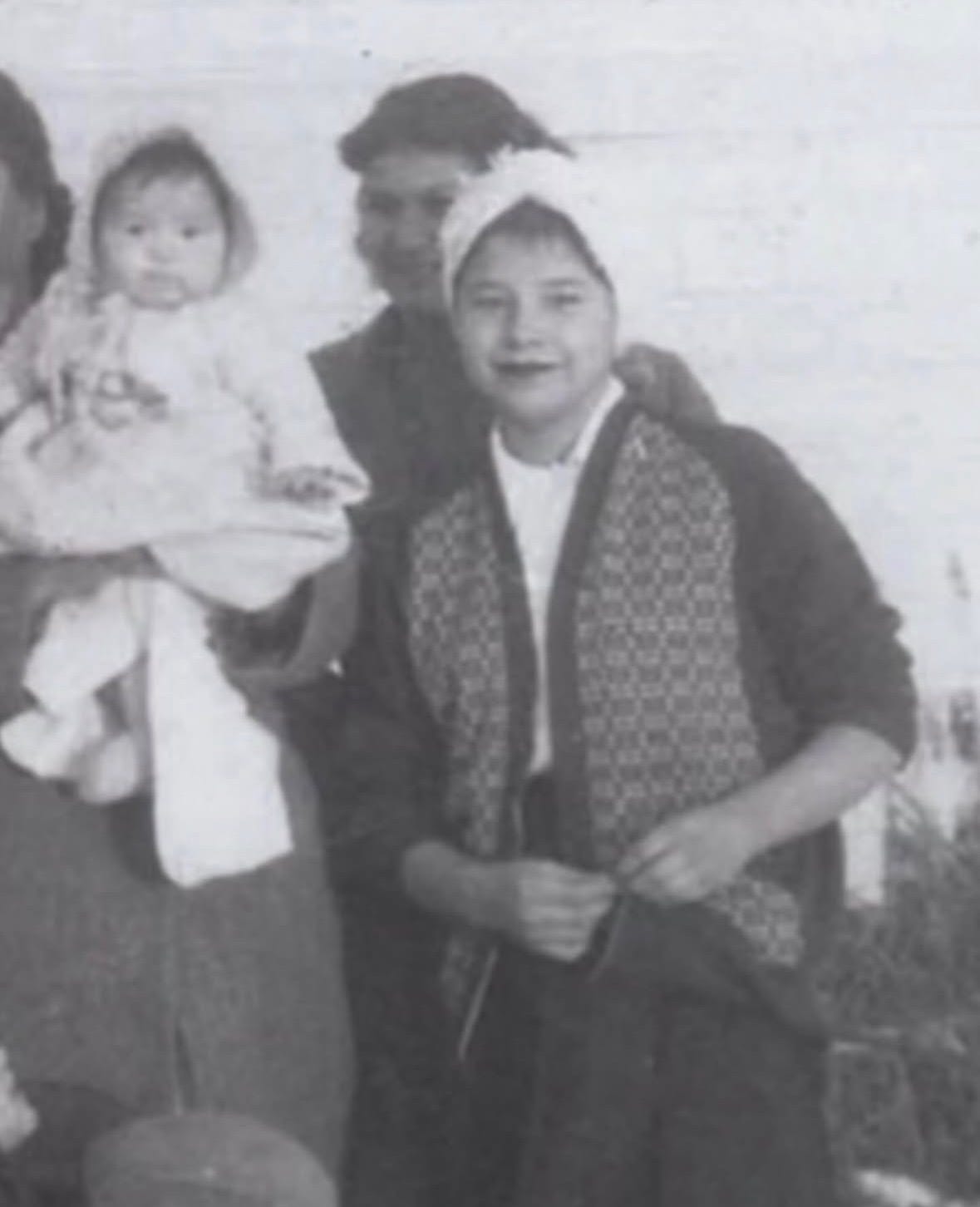
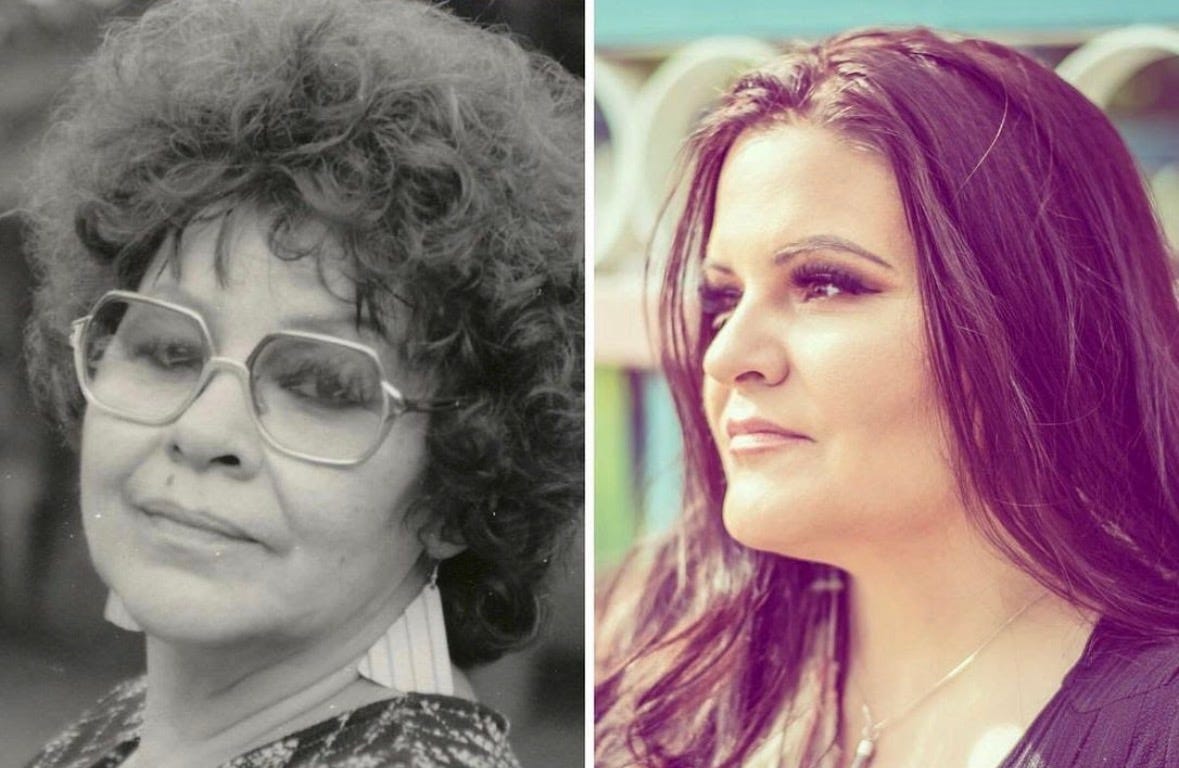
My Kohkum’s hands shook around her coffee cup every morning. I watched them as a little girl, sitting across from her at the kitchen table, not yet knowing what I was seeing. She never talked about it directly. She called it “The Convent.” That was all. Just those two words, carrying everything she could never say out loud.
She was a residential school survivor. The government’s attempt to kill the Indian in the child left marks that didn’t stay with her alone. They moved through her, into my mother, into me. Into the silence at that kitchen table. Into everything that was felt but never named. That is how intergenerational trauma works. It doesn’t announce itself. It just lives there, in the hands that shake, in the words that never come.
I grew up between worlds — family, foster homes, group homes, back again. At twelve years old I ran away from a group home and ended up trapped in an apartment for a week. I was raped and held against my will by older men. I was twelve. When I finally escaped to my Kohkum’s house and was made to go back and told my caseworker what had happened, she said: “That’s what happens when you run off.”
That response never left me. It was my first lesson in how easily Indigenous girls can be dismissed, blamed, and forgotten. How a child can be failed by every system built to protect her and then handed the bill for it.
At eighteen I gave birth in a psych ward. Holding my daughter, I felt the full weight of everything that had come before me pressing down on my chest. The cycle felt endless. Inevitable. Like water finding every crack.
But cycles can be broken.
I had a brief taste of journalism in my early twenties at a small community newspaper. Then life pulled me under again. At twenty-nine I went through a mental and emotional breakdown that brought me completely to my knees. I didn’t know who I was outside of survival mode. Finding out was slow and painful and necessary. I spent a long time in the wilderness of that. Praying. Searching. Asking whether there was more for me than what I had known.
And then one day, in the middle of that searching, a thought came to me. Not a vague feeling. A specific, clear, startling thought — the kind that stops you mid-breath and leaves no room for doubt about where it came from.
Put together a portfolio. A cover letter, your resume, a sample of your writing. And take it into the Spruce Grove Examiner/Stony Plain Reporter.
That terrified me. Stony Plain was my hometown. Those were people I went to high school with. I was the down and out single mother who people assumed wouldn’t amount to anything. I had no journalism degree, no credentials, barely any experience beyond that short time at the community paper years before. Every reasonable voice said: who do you think you are?
But I had nothing to lose. And I had heard something I couldn’t unhear.
So I got dressed. Nice dress. Knee-high sparkling high-heeled cowboy boots — because that is who I am. I love to make a statement, to show up fully, to stand out even when — especially when — I am shaking inside those boots. I made the portfolio and I walked through the door.
The editor, Carson Mills, came out (he changed my life). I handed him everything. We talked. And then I asked: do you happen to have any positions available?
He looked at me and said: your timing is impeccable. I’m looking for a full-time staff reporter right now.
In my gut, I knew. This was it.
For two weeks I proved myself writing for their business section on the side, while waitressing at a restaurant to keep my kids fed and the lights on. Then I interviewed for the full position — up against people with journalism degrees and years of experience.
I got the job.
And I caught fire.
I fell into absolute love with every story — the old lady baking a pie, the kids at the school book fair, the local council meetings. All of it. A fire was unleashed in my belly that I had never felt before. I was home. And I was paying attention.
I saw the tensions in my community. I saw the ignorance. I saw the almost total absence of Indigenous people and their lives and their humanity in that paper — in any paper. So I went to my editor with an idea. A weekly column dedicated entirely to Indigenous peoples, their issues, their culture. Something that had never been done at that paper before.
He said yes.
I called it Aboriginal Aspects.
And something shifted in me that I wasn’t prepared for. I started seeing my Kohkum everywhere. In the faces of elders I interviewed. In the eyes of mothers at kitchen tables in communities the country had never heard of. In women who had survived things they also had no words for. Every column was an act of recognition. A way of saying: I see you. I know you. You’re not invisible.
Then I began to see what was happening in the mainstream. How our people were being covered — the racism, the dismissal, the indifference, the violence that kind of storytelling quietly permits. I felt it like something burning in my chest that needed to be answered. I knew I had to be part of answering it.
I went on to work for the Aboriginal Peoples Television Network National News, becoming the Alberta correspondent. Then the CBC Indigenous Unit. I paid my dues. I learned the craft from the inside out. But I kept watching our stories land in this country with apathy and indifference — filed away, forgotten, absorbed into the noise. I knew these stories deserved the world.
So I leaped.
Good salary. Young baby at home. Comfortable life. I quit anyway.
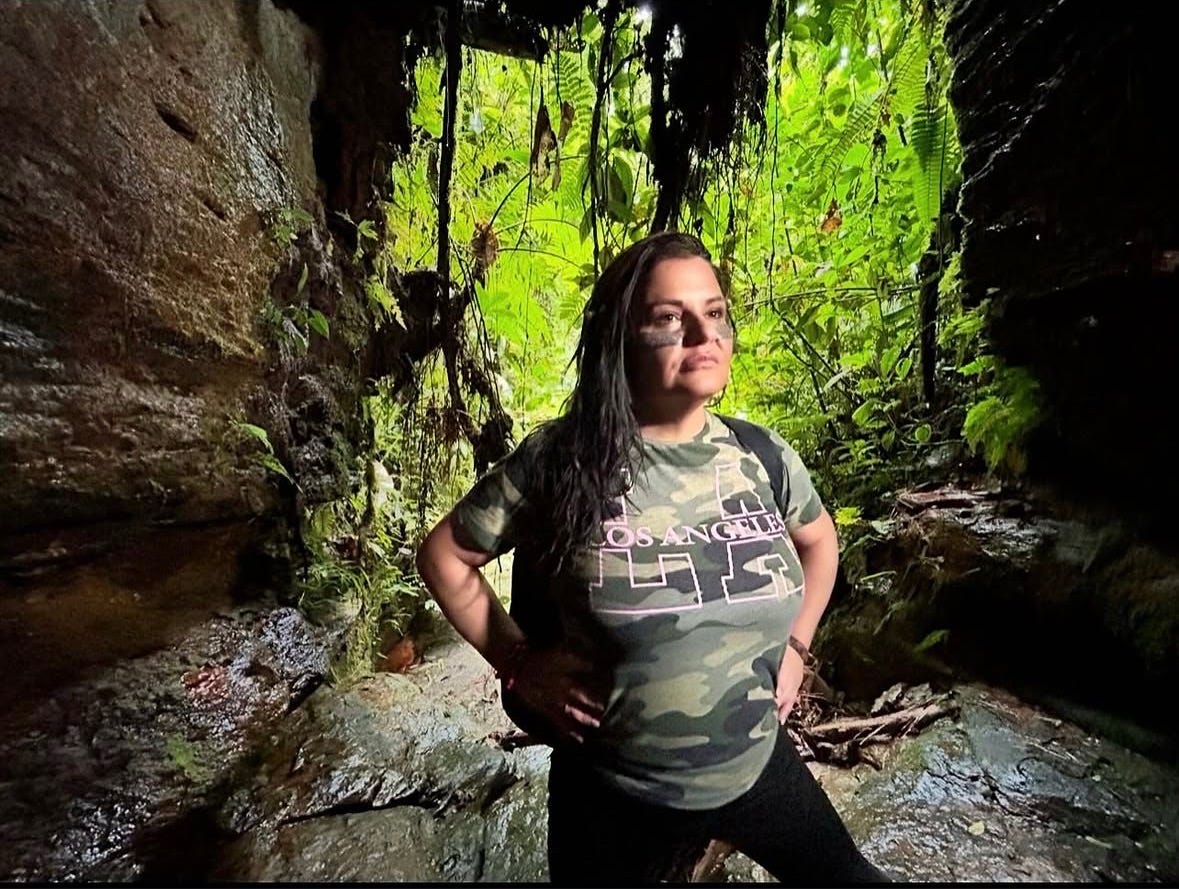
It didn’t happen overnight. It took seven years of on-the-ground work — grinding, learning, proving myself in every room that wasn’t built for me. But from nothing, from a breakdown at twenty-nine and a prayer and a pair of cowboy boots, I eventually found myself working for Al Jazeera English, National Geographic, The Guardian, the BBC, Rolling Stone the New York Times and more. From nothing to some of the most powerful media organizations in the world. Since 2019 I have been fully freelance — no one telling me what to cover, no one deciding which stories matter. I call my own shots. Our stories are finally reaching the world.
This is not a career. It’s a calling. It lives in every fiber of my being. I was built for this. I know that the way I know my own name.
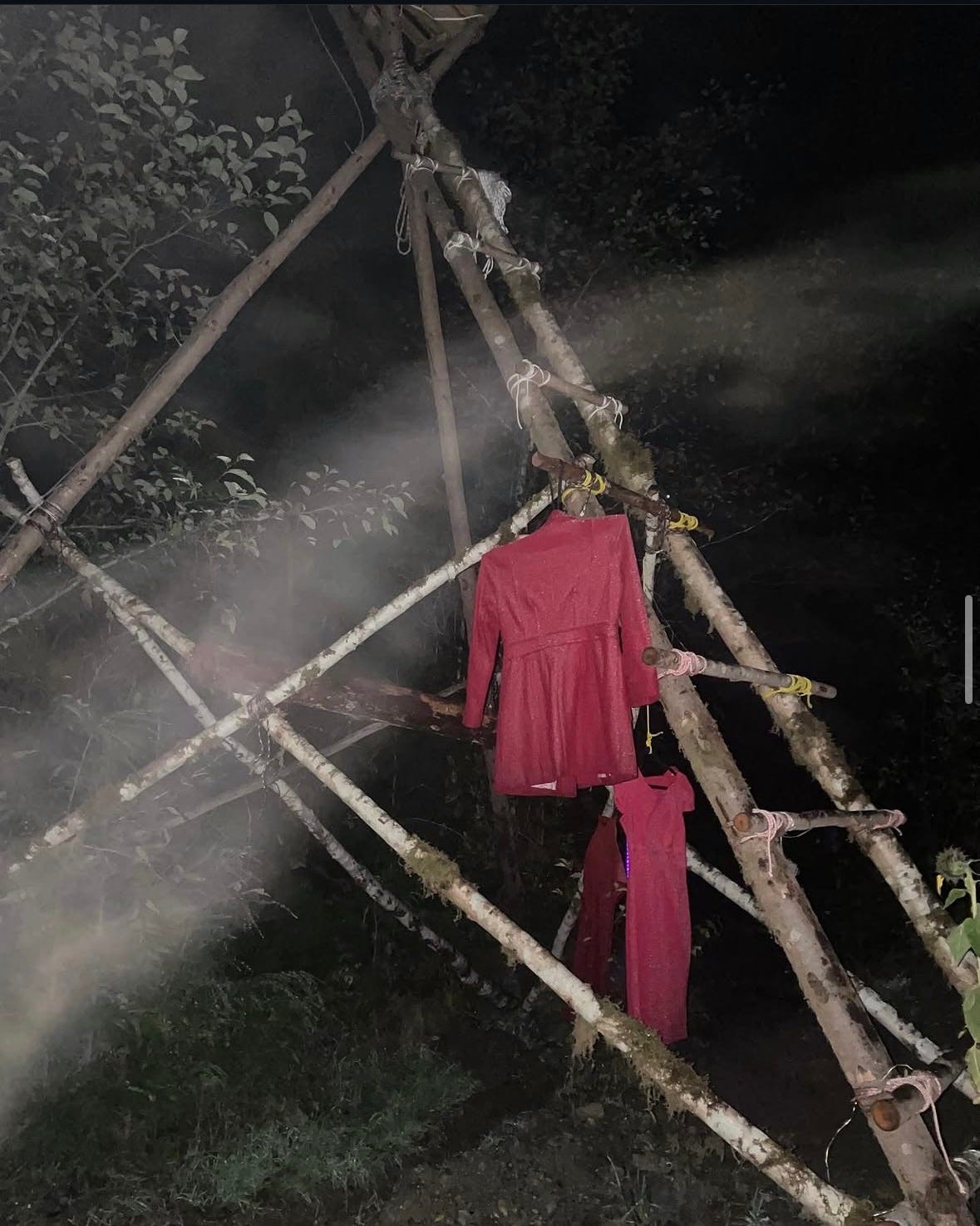
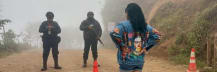
This work has taken me to the frontlines of resource extraction battles where police enact state and corporate violence against people defending their land. I have covered the genocide of missing and murdered Indigenous women and girls. I have sat with residential school survivors and held the weight of what they carried for decades in silence. I have looked into the eyes of a man asking his nurse quietly whether the mercury in his water is going to kill him.
Each story marked me. Each one cost something real. And each one returned something I cannot name — a deepening of purpose, a confirmation that I am exactly where I am supposed to be.
In January 2024, I was arrested covering a police raid on an Indigenous homeless encampment in Edmonton. Handcuffed on my own ancestral lands for doing my job. I felt the cold bite of the cuffs. I heard the cell door slam behind me. And sitting on that concrete floor, something came over me that I was not prepared for.
I didn’t just think about our people. I felt them. In my body. In my spirit. I felt the crushing weight of knowing that Indigenous people make up the majority of those inside Canada’s prison system. I felt every one of them in that cell with me. I felt the injustice of it like a physical thing pressing on my chest. I wanted to crawl out of my skin. It was that bad.
And then — my faith rose up. The warrior in me rose up. The same thing that carried my Kohkum through what she never spoke about. The same thing that got me off that floor at twenty-nine. It rose up and it held me.
The charges were eventually dropped. The day my lawyer texted me, I wailed. Right there on the phone, I wailed and wailed. Whatever that experience had locked inside me poured out all at once. And when it was done, what was left was not fear.
It was absolute clarity.
If those in power are trying to silence you, it means you are shining light on something they need to stay dark.
I treat every story I tell with reverence. Because behind every one is a human being who trusted me with the most painful, most sacred parts of their life. I do not take that lightly. I never will.
There is so much injustice the world has no idea about. So many stories still out there in the dark, waiting. And I think about my Kohkum’s shaking hands. I think about that little girl who didn’t understand yet what she was watching. I think about my daughters. And I think about that specific, startling, undeniable thought that came to me in the middle of my wilderness — the one that sent me walking through a door in sparkling cowboy boots with everything to prove and nothing to lose.
That thought from the prayers I prayed changed my life. These stories are why.
I will go to the ends of the earth to tell them.
Brandi Morin is an award-winning Cree and Iroquois journalist and filmmaker. Her reporting from Ecuador, Bolivia, Panama, and across Indigenous territories worldwide has been published in Ricochet, Cultural Survival, National Geographic, The Guardian, Al Jazeera English, and Rolling Stone. To support her work, subscribe here on Substack.
I’m so thankful you found your gift, you’re amazingly talented, you moved me to tears with your words. While I’m not Indigenous, and can’t imagine what you’ve been through, I have experienced trauma in my earlier life and felt the pain you described so vividly. While it’s beyond tragic what you and so many others experienced at the hands of those who were supposed to protect you, you haven’t let them keep power over you any longer. Bravo to you, I look forward to reading more about and from you. You are truly inspiring! Thank you!
❤️🙏🏻
Thank you