
My Friend Steven: Jailed, Surveilled, and Hunted — Still the Most Dangerous Man Chevron Ever Met
One lawyer. Thirty years. 30,000 people waiting in a poisoned Amazon. This fight isn't over.


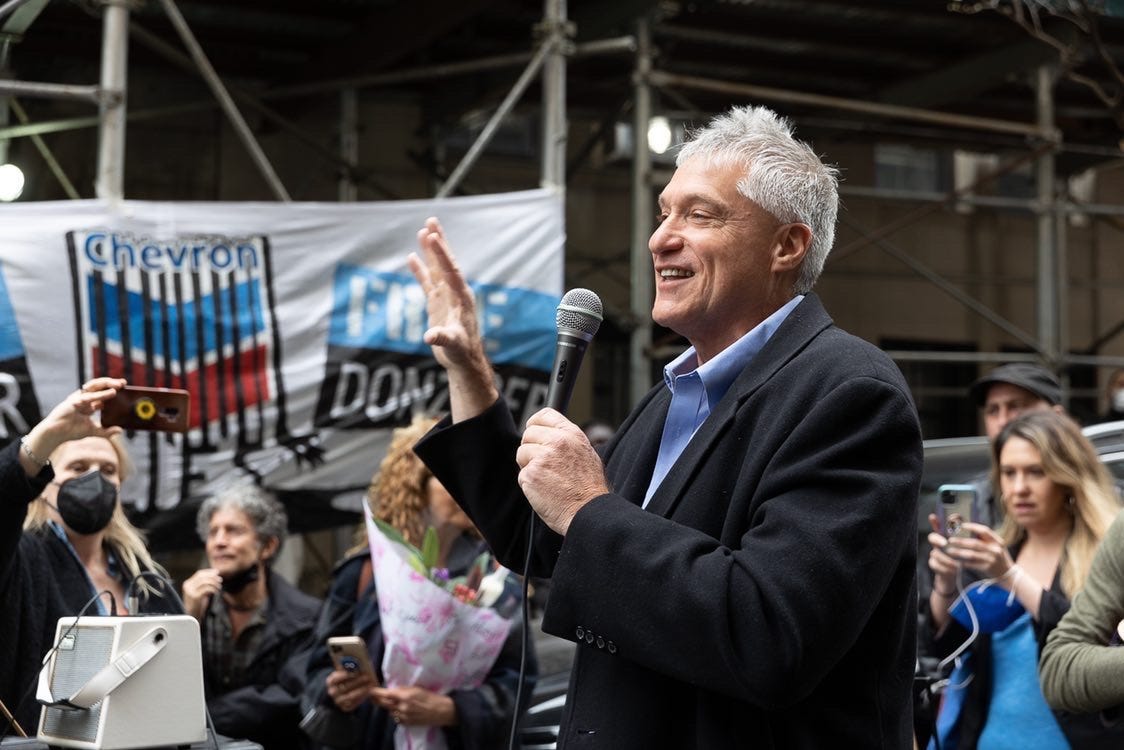
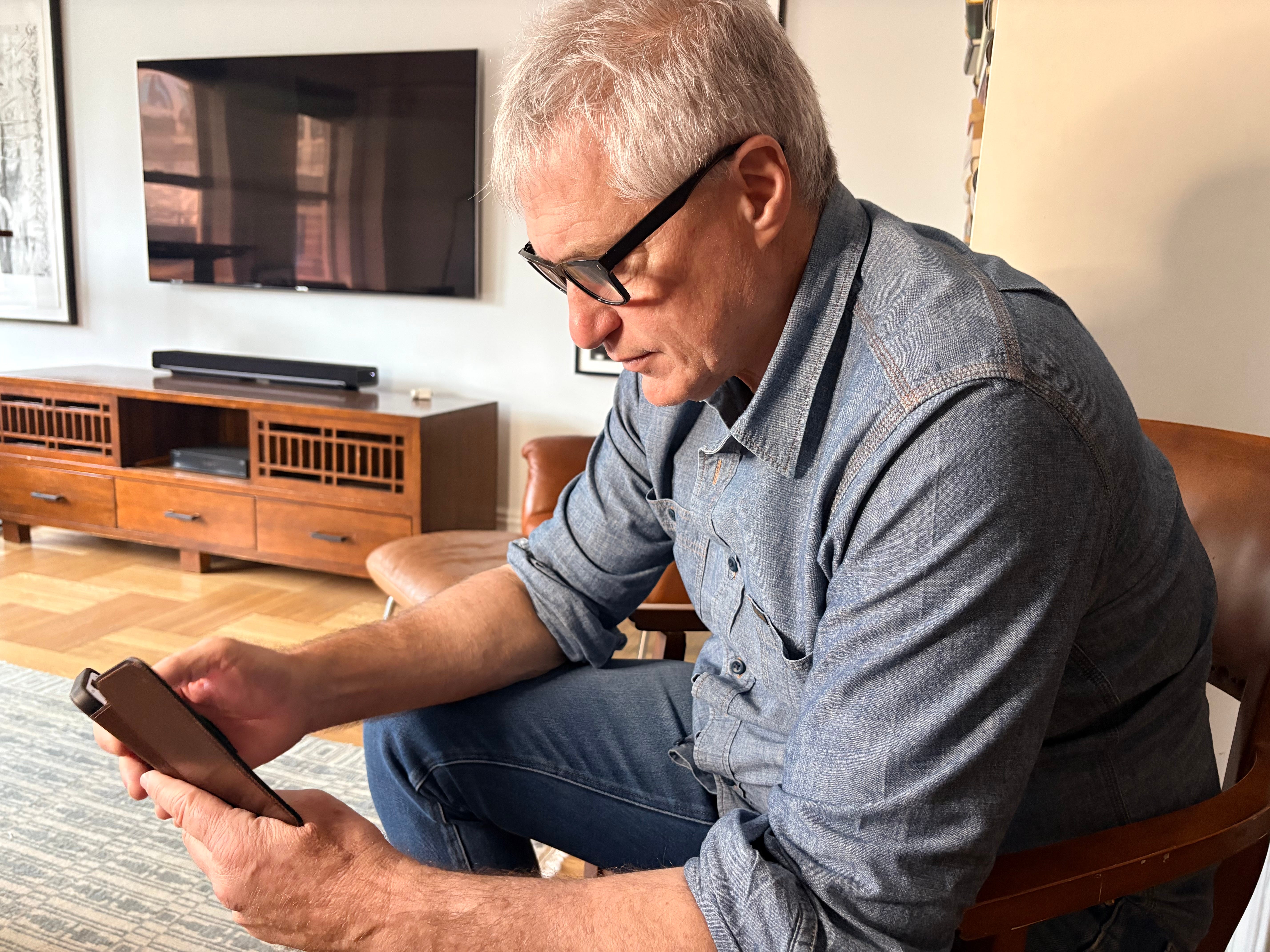
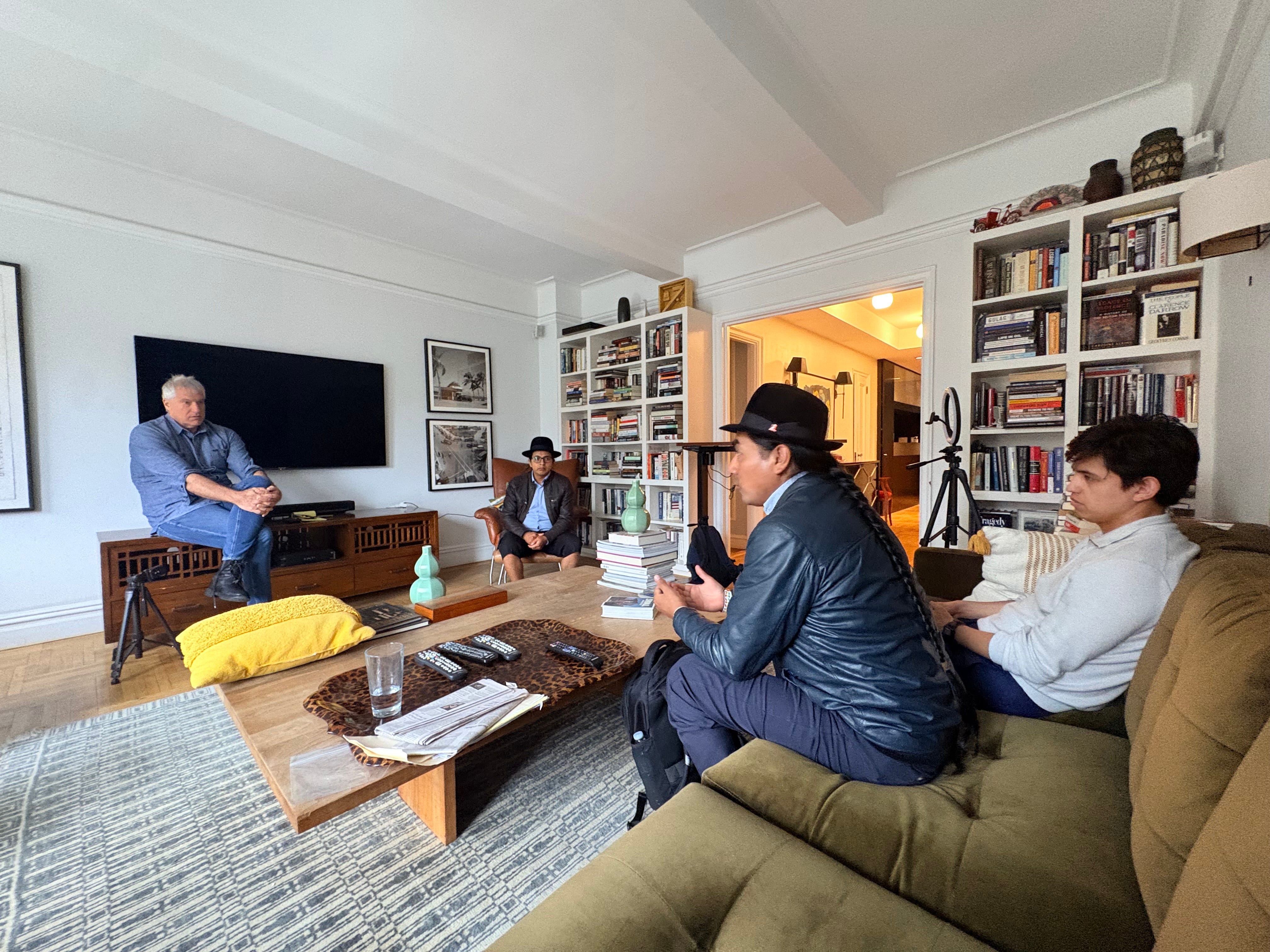
The living room is small but it breathes. Floor-to-ceiling shelves line the walls — law books, books on justice, Indigenous issues, art, history, philosophy — a whole life of fighting packed into a Manhattan apartment. Steven Donziger gets up early every morning in this room to research, to write, to provide commentary on wars and protests and injustices unfolding across a world that is, by his reckoning, at a turning point. He moves like a man with a world to save and not a moment to spare-warm but precise, electric in conversation. When I settle into the chair across from him and we start to talk, I have to remind myself where I am — in the same apartment where one of the most powerful corporations on earth tried to bury him.
They failed.
I first encountered Steven in the summer of 2017, working from home for the CBC Indigenous Unit, phone pressed to my ear, trying to keep up with the torrent of information coming from a man I’d never met. He spoke fast. Urgently. With the kind of conviction that makes you sit up straighter without meaning to.
He was trying to explain Ecuador. The contamination. The communities. The $9.5 billion judgment he had helped win on behalf of over 30,000 Indigenous and farming people in the Amazon — a judgment that Chevron was refusing to pay. He wanted me to understand that this wasn’t just a faraway story. It was Canadian. Chevron held significant assets here that could be seized to satisfy the judgment in Canadian courts. There was a delegation of First Nations leaders heading to Ecuador to bear witness and build alliances. He told me I should go. Report on it. Bring it back.
I wanted to. God, I wanted to.
But CBC didn’t have the budget to send me thousands of miles south to the Amazon. So I wrote the story from where I stood, stitching together what I could from phone calls and emails and the accounts of leaders who had made the journey I couldn’t. Former Assembly of First Nations leader Phil Fontaine stood in the Lago Agrio region and told me what he saw was “tragic…shocking.” Greenpeace co-founder Rex Weyler called it the worst environmental disaster in history — babies born with birth defects, a cancer epidemic, communities scattered from land and water that had been deliberately poisoned.
Then Chevron’s PR team found my personal number.
A representative called me directly to say I hadn’t given the corporation adequate space in the article I’d just published. They followed up with a complaint to the CBC Ombudsman. My editor pulled me off the story.
I was furious. But I carried that fury quietly forward — and it became fuel. It is part of why, in 2019, I left the safety of a staff job and became a freelancer — so I could follow the stories that matter without asking permission. Steven, in his own way, was part of that decision. Watching what they did to him — and watching him refuse to be broken by it — taught me something I carry to this day.
For those who don’t know his story — and far too many don’t — here is the version the headlines never quite captured.
In 1993, a young American lawyer travelled to the Ecuadorian Amazon and saw something that changed the course of his life. Texaco, later acquired by Chevron — an oil behemoth that’s outrun accountability for thirty years — had spent decades drilling for oil in the Lago Agrio region. The rivers that communities had fished and bathed in and drunk from for generations ran dark. Open-air waste pits gaped across the jungle floor, unlined, leaching toxins into the soil and groundwater. People walked barefoot on oil-slicked roads. When it rained in the Amazon, it sometimes rained black.
“The problem down in Ecuador was not the result of an accident,” Steven told me, matter-of-factually. “It was the result of a deliberate engineering design to discharge billions of gallons of cancer-causing toxic waste into the rainforest, into the rivers and streams that communities were using for drinking water, bathing and fishing.”
He spent the next three decades fighting for those communities — over 30,000 Indigenous and farming people whose land had been sacrificed for profit. In 2011, an Ecuadorian court found Chevron guilty and awarded the plaintiffs what became a $9.5 billion judgment — the largest environmental judgment in history — later affirmed by Ecuador’s highest court. Chevron refused to pay. Instead, they turned their entire legal machine on the man who had helped make it happen.
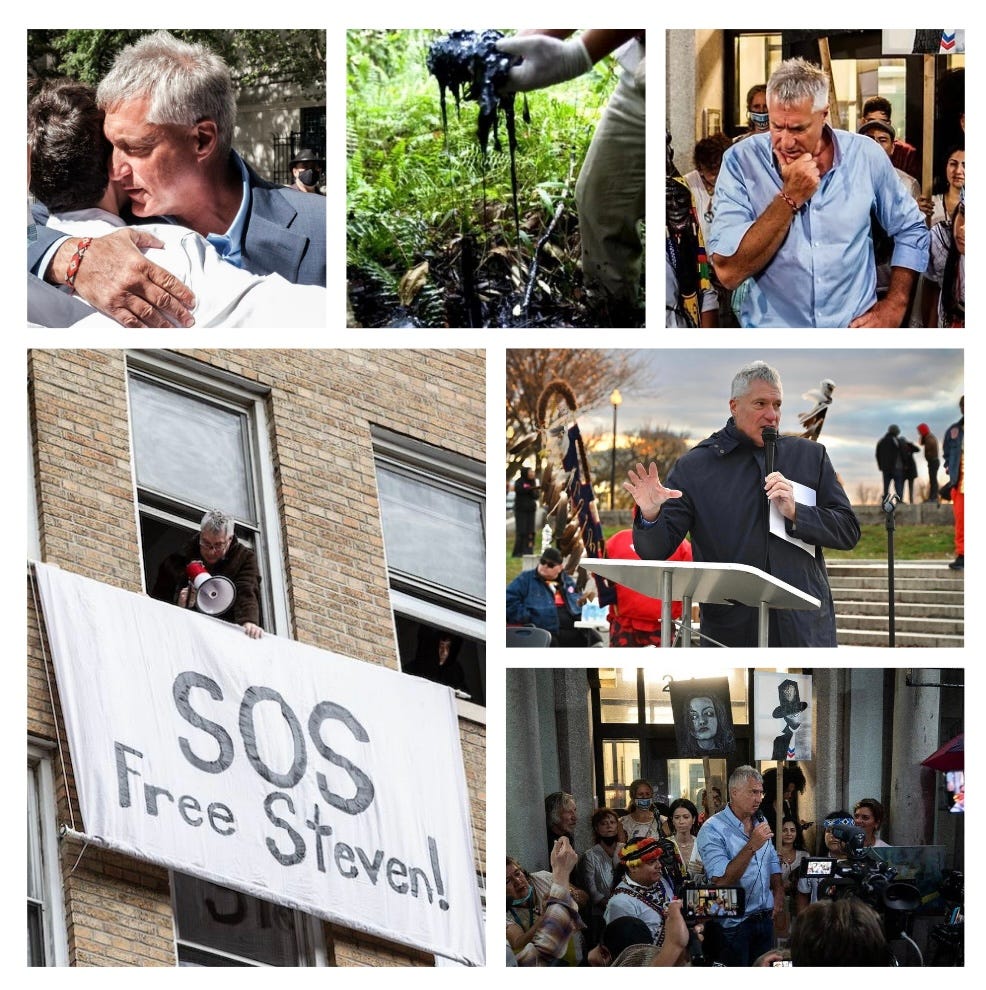
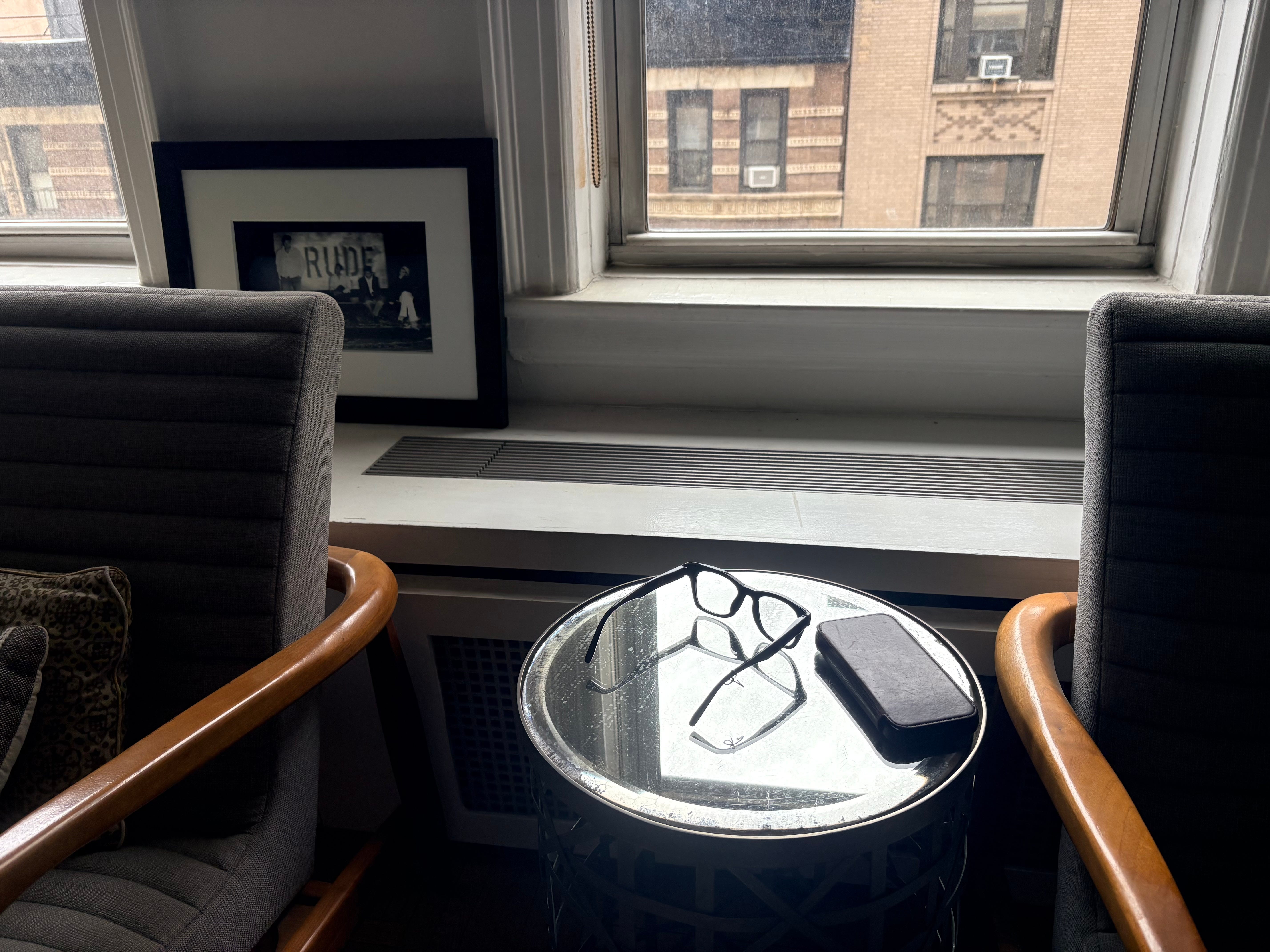
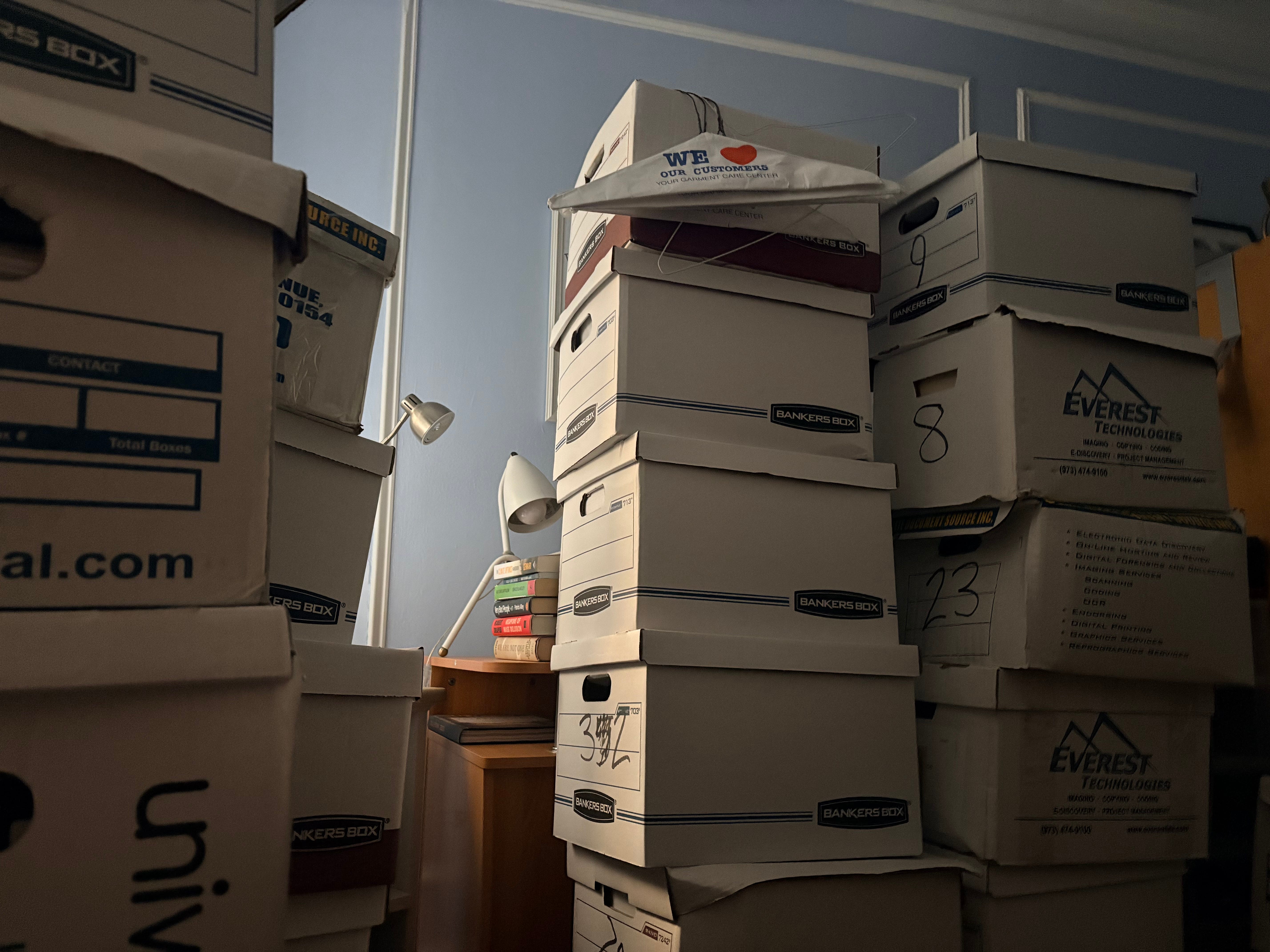
They filed a RICO lawsuit against him — suing him personally for $60 billion, more than Warren Buffett, more than Bill Gates, more than the Bank of America has ever been sued for. They had a judge appoint a private law firm — one that had previously worked for Chevron — to prosecute him in place of the U.S. government, after federal prosecutors declined to take the case. They froze his bank accounts. They put a lien on his apartment. They confiscated his passport. They stripped him of his law license without a hearing. They surveilled him. They stalked him. First came over 800 days of pre-trial house arrest — an ankle bracelet in this very apartment, waving from the window to the street below — present, defiant, alive. Then prison. Then house arrest again. Sixty-eight Nobel laureates called for his release. Thirty-four members of Congress wrote to President Biden demanding a pardon. Amnesty International declared his case a clear abuse of the justice system. The UN Working Group on Arbitrary Detention ruled his confinement a violation of international law. Biden did nothing.
“I was prosecuted by Chevron in the name of the US government,” Steven said, his voice steady. “Let that sink in.”
I have let it sink in, many times, over many years of knowing him.
Not long before I came to New York City for this interview, I called him. I was in a panic — experiencing what I can only describe as a taste of the corporate intimidation Steven has lived with for decades. I was scared. Genuinely scared. I texted him: Can I call you, please?
Despite everything on his plate — the speaking engagements, the book, the legal battles, the democracy work, the Ecuador case that never sleeps — he texted back immediately: Of course.
So I called. I explained the situation, my voice unsteady. And he listened. Then he said something I have not stopped thinking about since.
“You have to go into the fire, Brandi. You go into the fire — or they’re going to burn you. Face it, or you’ll burn to ashes.”
I sat with that. I made my decision. I went into the fire.
That is who Steven Donziger is. A man who has been through every kind of hell this system can manufacture — and still, when you call him at his lowest and ask for help, he picks up and gives you the thing you need most. Not sympathy. Clarity. Courage. A way forward.
It’s never about him. That’s what I want you to understand — the thing no headline has ever captured. This man lost his law license, his freedom, his passport, every dollar he had. And when I called him during my own hard spells, my own moments of doubt in this work, he would speak about me. He would tell me I was the best Indigenous journalist in the world. That he was going to help me find funding. That I needed to press on. Wild, wonderful, generous things said by a man who had every reason to think only of himself.
When I won the Edward R. Murrow Award in 2022 and traveled to New York City to accept it, Steven was over the moon. He announced it to his more than 200,000 followers on X and over 100,000 on Instagram. Just me, he said. Just this remarkable journalist doing work the world needs. He was more proud than I was, I think. That’s who he is.
Even Hollywood knows. I was there last week when Alec Baldwin took the stage at an Amazon Watch event and called Steven Donziger exactly what he is- a hero.
Steven- never missing a chance to champion the people and organizations fighting alongside him.
Sitting with him last week, I asked him about the rule of law. About what it means when a corporation can purchase its own prosecution. His answer was clear-eyed and unsparing.
“When the rules allow them to win, they’re happy to play by the rules,” he said. “When the same rules allow their victims to gain ground and hold them accountable, they suddenly don’t want to play by the rules.”
He talked about the $9.5 billion judgment still unpaid — a number that, with accrued interest, has now grown past $10 billion. About the communities in Ecuador still waiting. Still living on contaminated land, in contaminated water, with contaminated bodies. Still waiting for a corporation worth hundreds of billions of dollars to honor a court order. The legal obligation follows Chevron across borders — there is no statute of limitations on the enforcement of foreign judgments in other countries. The pursuit continues, with or without Steven at the helm.
“There are thousands of lawyers on this planet who are capable of carrying this forward,” he said.
He talked about the Supreme Court — a political arm of the Trump movement, in his view, unambiguous and unashamed. He talked about democracy under threat. And he talked about what’s happening to Indigenous and environmental defenders around the world — the same corporate playbook, deployed continent by continent, to silence the people standing between extractive industry and the land.
“The criminalization of protests is definitely happening in the US and in many countries around the world right now,” he told me. “What Chevron did to me was the canary in the coal mine. A lot of companies are copying the Chevron playbook to go after protesters and people who are successful in holding them accountable.”
In Canada, laws are being passed to treat protests against pipelines and so-called critical infrastructure as near-criminal acts — a weight that will fall hardest on Indigenous peoples defending their own unceded territories. Steven sees the architecture of it clearly.
“In laws that somehow put protests of oil installations in a different category than other protests — you get three times the length of the sentence,” he said. “I think that’s unconstitutional. That is not equality before the law.”
Before he became one of the most consequential environmental lawyers of his generation, Steven was a journalist — five years in the profession before law school. Those skills never left him. Even stripped of his license and his resources, he built a multi-platform advocacy campaign from almost nothing. Press releases written as news stories. Films. Direct publishing. Truth as leverage.
“When you’ve lost everything — the money, the license, the freedom to travel — you fight with what you have left,” he said. “Telling the truth, illuminating it, doing films, doing stories — that’s how you create leverage when power has all the money. That’s how you hold them accountable even when the courts fail you.”
There was something that felt like recognition in that moment — two people who had each found their way to the same crossroads of Indigenous rights and corporate power, each using the tools of storytelling to keep the light on.
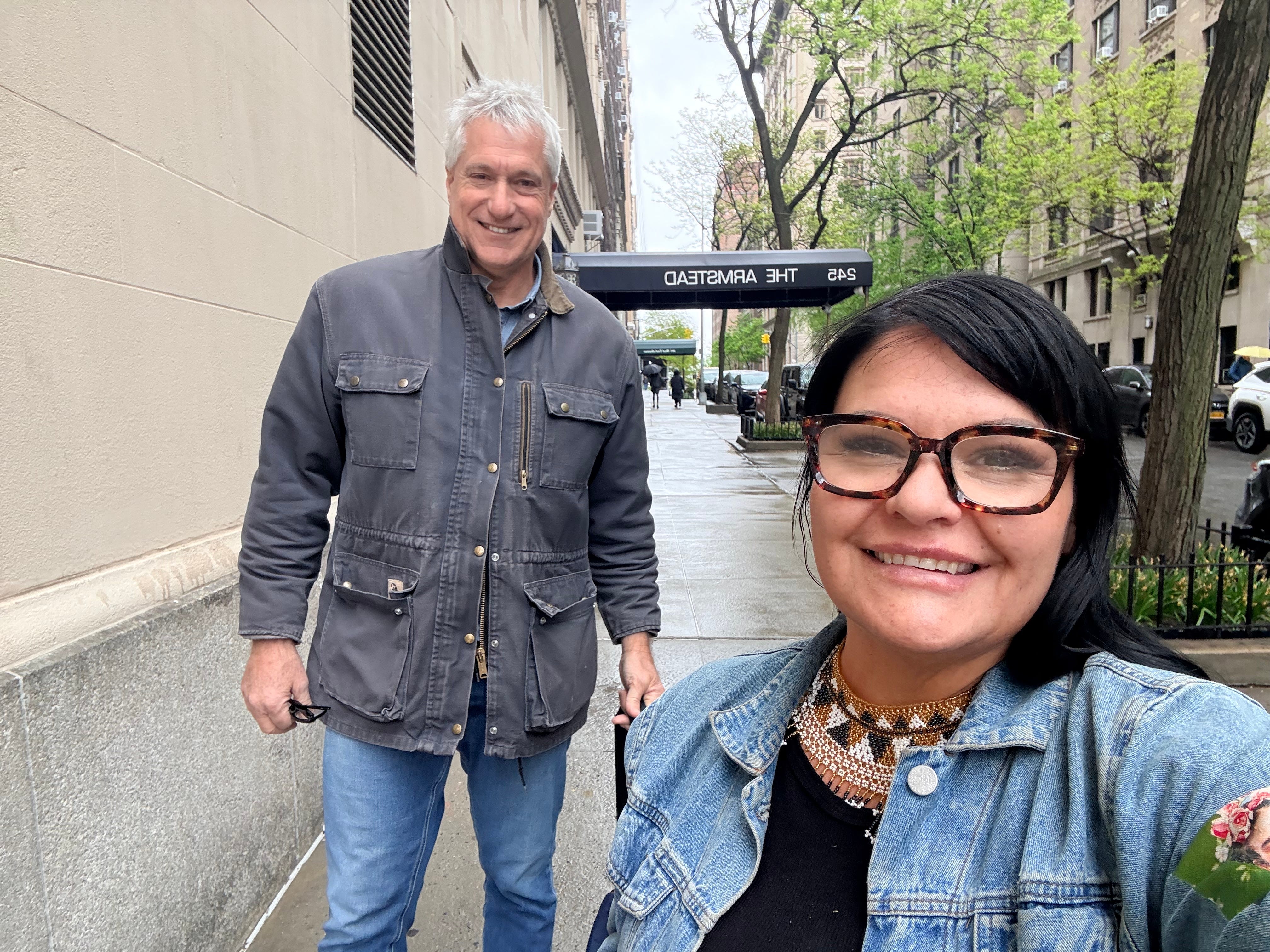
He’s been back to Ecuador recently. In March, he made an emotional trip to attend the funeral of Luis Yanza — a beloved leader at the heart of the communities’ decades-long fight, someone Steven was deeply close to. A profound loss. But he’s going back again soon. The work doesn’t stop, even in grief.
I know that pull. I have made nine trips to Ecuador myself since November 2024 — falling in love with the country, the people, the Andes and the Amazon, leaving pieces of my heart there each time. Steven already knew. He has been watching, celebrating every trip the way only he can.
“It’s my second home,” he said, smiling. “I’ve been there so many times. I know exactly what you’re talking about.”
We made a plan, half-joking and fully meaning it, to go together someday.
And then he said something that stopped me cold.
Credible people, he told me, have approached him about running for political office. As a Democrat.
I sat there for a moment, taking that in. Stunned — but not surprised. Because somehow, it made perfect sense.
“I didn’t say I want to do it,” he was quick to clarify, that familiar smile playing at the corner of his mouth. “People approach me to do it. It’s intriguing to think about. That’s all I’ll say.”
But then he said something that cut straight to the bone of why it matters.
“Most of our elected leaders in the National Congress are supine when it comes to standing up to Trump,” he said. “The Democratic Party is not really an opposition party. It’s a corporate-dominated entity that has no structural ability to mobilize the masses of people needed to stop what Trump is trying to do. When you have an authoritarian strongman leader like Trump and no real opposition — the country needs leadership.”
I looked at him sitting across from me in that apartment. The man they jailed. The man they surveilled and hunted and sued for $60 billion. The man who went to prison as an innocent person and came out with his fire not just intact — but burning brighter.
The next President of the United States?
My friend Steven.
I mean — can you imagine?
Here is what I know after nearly a decade of knowing him:
The people he fought for in Ecuador are still waiting for justice. Still living on land and in water that a corporation deliberately poisoned, while Chevron — a corporation powerful enough to privatize American justice— refuses to honor a judgment rendered against them by the very courts they demanded the case be tried in.
The system failed him. It jailed him for winning. It stripped him of his license, his money, his freedom, his ability to travel. This was designed to make an example of him — to look at every young lawyer, activist, or journalist thinking about taking on a corporate giant and say: this is what happens.
But here is what the example actually shows: they threw everything they had at this man, and he is still here. Still getting up before dawn to do the work. Still answering the phone when a frightened journalist calls. Still thinking about everyone else first.
Steven Donziger will go down in history as one of the great human rights defenders of this era. He told the truth when one of the most powerful corporations on earth needed him to stop. He kept going when every institution around him bent to oil money. He went to prison as an innocent man and came out stronger. He told me to go into the fire — and he has been living in it for thirty years.
They tried to extinguish him. They couldn’t.
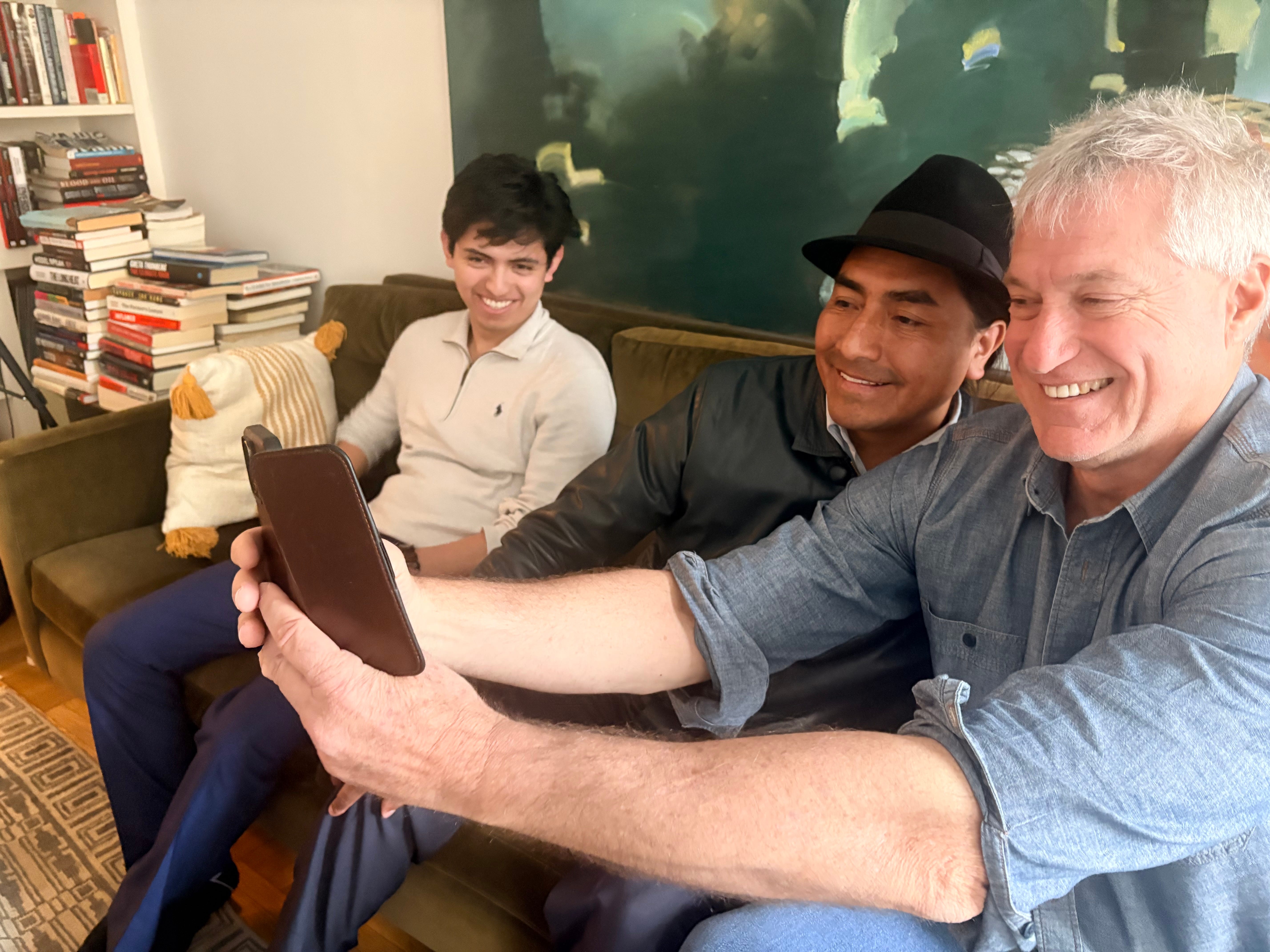
He is, as I told him to his face last week, my hero. Not the kind who exists at a comfortable distance, untouchable and abstract. The kind who answers the phone when you’re struggling. Who celebrates your wins louder than you do. Who sits in a small apartment lined floor to ceiling with books about justice, gets up before the sun, and keeps going.
The darkness could not put out that light.
In fact — he’s just getting started.
Follow Steven Donziger on Substack at Donziger on Justice and on social media @SDonziger. The communities he represents in Ecuador are still seeking enforcement of their judgment against Chevron.
Brandi Morin is an award-winning Cree, Iroquois and French journalist and the founder of Indigenous Insider on Substack. Subscribe at indigenousinsider.substack.com
 | A guest post by
|